
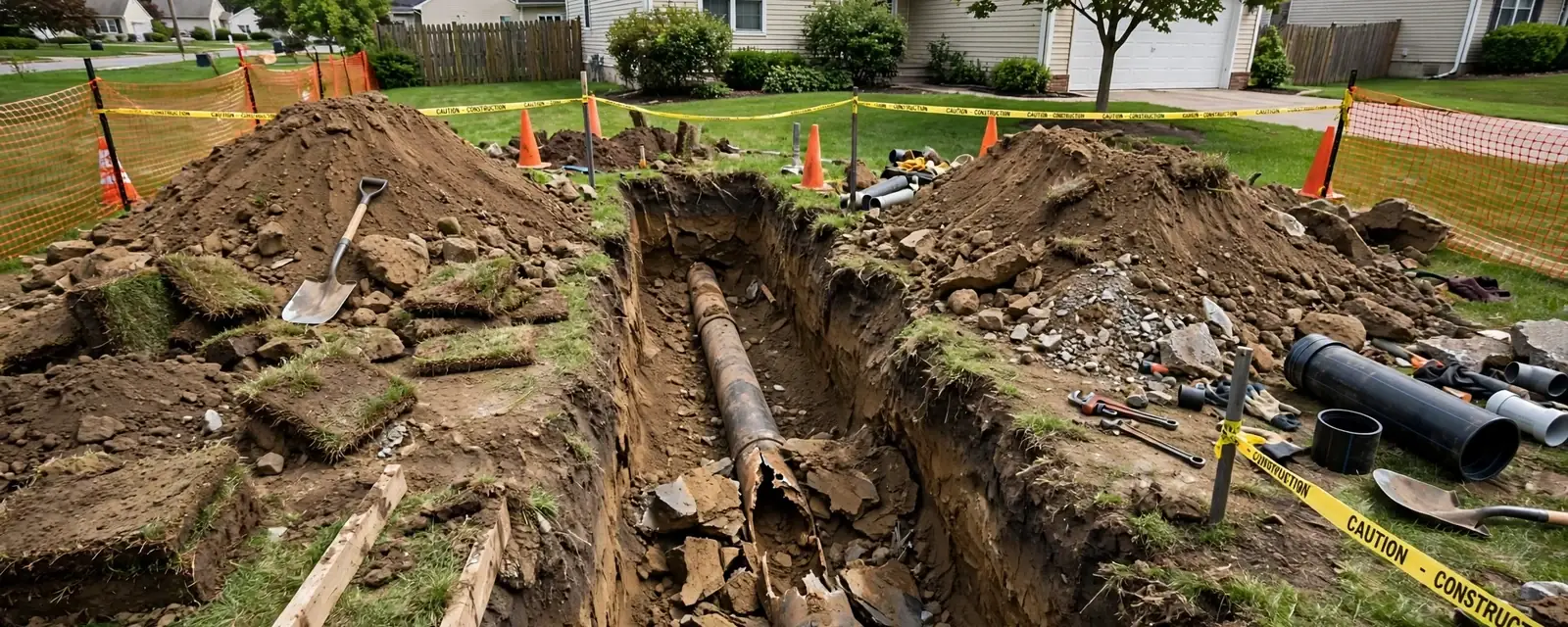
A failing sewer line in Millburn, NJ
Sewage coming up through a floor drain or toilet is an emergency, and our 24/7 line sends a licensed plumber for sewer line repair in Millburn, NJ at any hour. Stop using water, keep children and pets away from the wet area, and stay out of standing water near outlets or the panel while you wait.
A sewer line, also called a lateral, carries everything from the house to the public connection. When it cracks, shifts at a joint, sags or collapses, wastewater slows down and solids settle. Cleaning clears the symptom for a while. Repair fixes the pipe.
Signs the pipe itself is failing
- Backups that return after every cleaning
- A cable or camera that stops at the same spot
- Gurgling toilets and bubbling floor drains
- Sewer smell in the basement or near a cleanout
- A soft, sunken or unusually green patch in the yard
- Cracks or gaps seen in an earlier camera look
Sewer backup: what to do first
Act on the house first and the pipe second. The first minutes decide how much of the basement gets wet.
Stop adding water
No flushing, no showers, no dishwasher, no washer. Every gallon has nowhere to go but up.
Keep people clear
Sewage carries bacteria. Keep children, pets and anyone vulnerable away from the affected rooms.
Mind the electricity
Do not walk through standing water near outlets, a furnace or the panel. Turn off power only if the breaker is dry and reachable.
Do not use chemical openers
They cannot clear a full line and leave a caustic pool that is dangerous to open later.
Call the dispatch line
Tell the dispatcher which fixtures are backing up and where the cleanout is, if you know.
A backup at midnight gets the same first moves as one at noon. The plumber's first goal is to restore flow so the water stops rising and the house is usable again. The repair plan comes after a camera look, and a same-day visit for that work is possible when the schedule allows.
Sewage is not ordinary water
Wear boots and gloves if you must cross a wet floor, and wash well afterward. Soaked carpet, drywall and stored cardboard may need professional cleanup, so ask your plumber what to expect.
Backups that keep returning point to the pipe.
Tell the dispatcher what has been cleaned and when it came back. A licensed plumber will start with a camera look, not another cable.
How a sewer line fails
Tree roots enter at joints looking for moisture and grow into a mat that catches paper and grease. Older clay tile joints slip apart, and cast iron corrodes from the inside. Soil movement, heavy loads and the ground settling can push a joint out of line or leave a low spot where water pools.
A sag, sometimes called a belly, holds water and collects solids, so the line clogs at the same place again and again. A true collapse stops flow altogether. A camera look is the only reliable way to tell these apart, which is why sewer inspection usually comes before a repair decision.
Cracked or broken pipe
A crack lets soil and roots in and sewage out. Small cracks may show no symptoms for a while, then a heavy rain or a root mass turns them into a backup. A broken section usually means the line must be opened or relined at that spot, and cleaning alone will not hold.
Waiting after a backup has been relieved is a gamble. The same break that let one clog start will start another. Plan the repair while the line is working, not after the next backup.
Spot repair, pipe lining or replacement
The right repair depends on how much of the pipe is bad, what it is made of and how it runs under your property. Trenchless methods avoid digging up the whole yard, but they have limits.
| Option | Good for | Honest limits | Disruption |
|---|---|---|---|
| Spot repair | One broken or offset section | Rest of the old pipe stays as it was | Dig at one point |
| Pipe lining | Cracks, leaking joints and roots in a pipe that is still round | Not suited to collapsed, badly bellied or crushed pipe | Small access holes, little digging |
| Replacement | Long damaged runs, collapse, bellies or failed materials | Most work and the most time | Open trench or pipe bursting |
Lining needs a pipe the liner can pass through, so a camera look and a cleaning come first. If the camera finds a collapse or a deep sag, the plumber will tell you lining is the wrong answer. Ask what happens to roots at each joint and what the repair does about the next one.
What a repair visit involves
The visit starts with a camera look and a line locator, which trace the pipe, mark its depth and show the exact spot of the failure. The plumber then explains the options with the picture in front of you, so you can see why one method fits and another does not.
Digging, lining and replacement may need a permit, and rules vary, so ask the Millburn building department before work begins. Finish work such as backfilling, patching and restoring the surface is part of the plan, and it should be discussed before the first cut.
What Ida means for backflow and backup decisions
Remnants of Ida hit on the night of September 1, 2021, and the West Branch of the Rahway River overflowed into the streets. In the South Mountain area, basements filled with water and sewage. A preliminary township assessment put damage to businesses and homes at about $100 million.
Repairing a lateral does not stop floodwater from pushing wastewater back through a floor drain. A backwater valve, a device that closes when flow reverses, is a separate decision, and your plumber can explain where one would sit on your line. Permit rules vary, so ask the Millburn building department. Neighbors in Maplewood, which shares the South Mountain Reservation boundary, face the same question.
Septic or public sewer: know which you have
The first step on any sewer problem is confirming what the property is connected to. A house on public sewer sends waste to a connection at the street, and a house on a septic system sends it to a tank and drain field on the lot. The repair, the access points and the questions to ask all differ.
Look for a septic tank lid or ask the seller or a previous owner's records. If you are unsure, say so when you call, and the plumber can trace the line and find out. We do not assume either one for your address.
Cleaning first, repair second
A line with a clog and no damage needs cleaning, not repair. Sewer line cleaning clears the main from the cleanout and covers main sewer and sewer drain cleaning. Hydro jetting adds high-pressure scouring where grease and scale are the problem.
The honest sequence is clear the line, look with a camera, then repair what the picture shows. Cleaning a pipe that is already broken just delays the next backup.
What changes the price of a sewer line repair
Sewer repair prices swing widely because the work does.
Homeowner insurance often excludes wear, roots and gradual damage to the pipe itself, though some policies add sewer backup coverage by endorsement. Check your policy.
Call the dispatch line, and the price is explained before work starts.
Frequently asked questions
Yes. The dispatch line answers around the clock, and a licensed plumber can be sent for a sewage backup at any hour, with same-day visits when the schedule allows.
Stop using water and keep people away from wet electrical areas while you wait.
Not necessarily. A camera look shows whether the damage is a single localized crack or a long run of failing pipe. A spot repair or a liner over one cracked section can be enough when the rest of the pipe is sound.
If roots have damaged several joints or the pipe is crushed, replacement may be the better answer.
One slow sink is usually a branch clog. Several fixtures backing up together, a bubbling floor drain or a toilet that gurgles when the washer runs points to the main line.
A camera look pins down the location.
No. Lining suits pipes with cracks, leaking joints or roots that are still round and can be cleaned. Collapsed, crushed or badly bellied pipe usually needs spot repair or replacement.
The plumber will say so after a camera look.
It can stop wastewater from flowing back into the basement when the public line is overwhelmed, but it must be placed and maintained properly. After Ida, many South Mountain area basements filled with water and sewage.
Ask your plumber about the options, and ask the Millburn building department about permits.
Say so when you call, because the work is different. The first step is confirming what the property is connected to.
We do not assume either one for an address.
Cleaning removes what is blocking the line, and repair fixes the pipe that keeps getting blocked. See sewer line cleaning for the cleaning side.
If a line is cleaned and still backs up, repair is the next step.
Still have a question? Call the 24/7 line and talk it through with a dispatcher.