
Drain snaked, but the clog came back?
A line that is pushing sewage or gray water back into the house is an emergency, and our 24/7 line takes hydro jetting calls in Millburn, NJ at any hour. While you wait, stop running water, hold off on flushing, and keep children and pets off wet floors. Stay away from standing water near outlets or the electrical panel.
Most callers describe a symptom, not a service name. The drain was snaked and clogged again, the cable stopped partway down the line, or the tub, kitchen sink and washer all drain slowly at the same time.
Each of those patterns points to buildup on the pipe wall that a cable cannot remove. A snake bores a hole through the blockage and leaves a coating of grease, scale or root hair behind, and that coating catches the next clump. Hydro jetting scours the wall itself, which is the job this page explains.
Signs a cable alone will not be enough
- A drain that clears with a snake and slows again within weeks
- A cable that stops at the same depth every time
- Slow drains in several fixtures, usually the lowest ones first
- Gurgling in a tub or floor drain when a toilet flushes
- Roots found on a snake blade or in an earlier camera look
- A basement floor drain that bubbles when the washer runs
How hydro jetting works inside the pipe
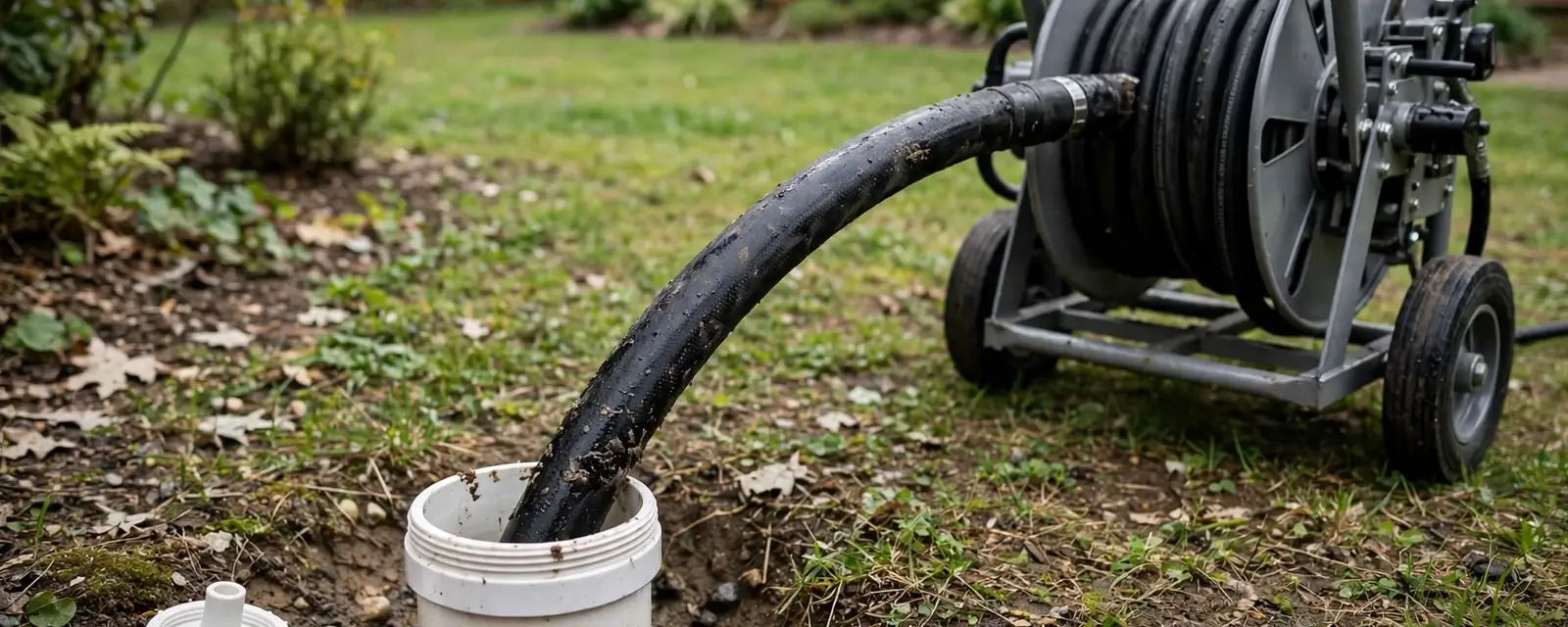
A jetting machine pumps water through a flexible hose to a nozzle with several small openings. Some jets face backward, which pulls the hose down the pipe and drives water against the walls. Others face forward to break up the blockage ahead of the nozzle.
As the hose is drawn back, the spray scrubs grease, scale and soft debris off the wall and carries it downstream toward the main sewer. The plumber picks the nozzle to suit the line, so a kitchen branch gets a different tip than the main.
Find the access
A cleanout is the best way in. Without one, the plumber may pull a toilet or open a trap so the hose can enter the line.
Look before pushing
When the history calls for it, a camera shows roots, offsets or collapse before any water pressure goes in.
Open a channel
The forward jets break through the clog so water can start moving again.
Scour on the way back
Drawing the hose out scrubs the walls over the whole run, not just at the blockage.
Confirm flow
Water is run through the fixtures to check that the line moves freely and to catch any slow spot that remains.
A cable did not hold. Let us look at the pipe wall.
Describe where the clog returns and how far the snake went. A licensed plumber will tell you whether jetting or a camera look comes first.
When a clog is an emergency, not an annoyance
One slow bathroom sink can wait for a daytime appointment. Sewage in a tub or basement floor drain, toilets that will not flush, or water rising when the washer drains cannot wait. Those signs point to a blocked main, and every fixture above the blockage keeps adding water.
Night and weekend calls get the same method as daytime ones. Tell the dispatcher which fixtures are affected, where water is showing, and if you know where the cleanout sits. Same-day visits are possible when the schedule allows, and the licensed plumber decides on site whether jetting, a cable or a camera look should come first.
Water is coming up inside the house
Stop using sinks, tubs, the dishwasher and the washer. Do not pour chemical openers into a full line, because the liquid sits in the pipe and can splash back on whoever opens it later.
If water is near outlets, an appliance or the panel, keep people away. Shut off power only if you can reach the breaker without stepping in water.
Jetting versus snaking, side by side
A cable is not the lesser tool. It is the right call for a single toilet, a hair clog in a tub or a blockage right at the trap, and it puts less stress on old pipe. Jetting earns its place when the trouble is the pipe wall or the whole run, which is where ordinary drain cleaning with a cable often stops short.
| Question | Snaking with a cable | Hydro jetting |
|---|---|---|
| How it clears | Bores a hole through the clog | Scours the wall along the run |
| What stays behind | A coating of grease, scale or roots | Walls scrubbed back toward bare pipe |
| Best fit | One fixture, a toilet, a hair clog | Repeat clogs, grease, slow drains in several fixtures |
| Roots | Cuts a channel, roots regrow fast | Flushes cut roots out, joint stays open |
| Old fragile pipe | Gentler in most cases | Needs a look at the pipe first |
| Access | Often a trap or fixture will do | Usually a cleanout or open line |
When a camera look or a repair has to come first
Water pressure is the wrong tool on some lines. If a section has collapsed, shifted at a joint or sagged until it holds standing water, the jet has nowhere useful to go. Pushing pressure into a gap can also wash soil into the pipe and widen the void.
That is why a plumber may ask for a camera look before agreeing to jet, especially after repeated stoppages in one spot. A sewer camera inspection shows the pipe material, the condition of the joints and the exact place the trouble sits, so the decision rests on a picture and not a guess.
If the camera finds a break or a collapse, the honest answer is repair, and cleaning only buys time. You would hear about sewer line repair options before any more jetting. A line cleaned and then left with a known break tends to clog again.
What hydro jetting can damage, said plainly
Jetting is safe in sound pipe and risky in tired pipe. Older drain lines can be clay tile with loose joints, cast iron with rough scale inside, galvanized steel narrowed by rust, or bonded fiber pipe that softens with age. Check what your own pipe is made of, because the material changes from house to house.
Scale can be doing more than you think. In old cast iron, heavy buildup sometimes plugs thin spots, and scouring it away can expose pinholes that begin to weep. Soft or deformed pipe can crack under a hard stream, and a loose clay joint can open further.
None of that means old pipe never gets jetted. It means the plumber should look first, match pressure and nozzle to the pipe, and say so if the line is too fragile. Be wary of anyone who promises jetting will fix any line without asking what the pipe is.
Ask before the hose goes in
Ask what the pipe is made of, whether a camera look has been done, and what happens if the line turns out to be damaged. Those three answers tell you whether jetting is a fix or a gamble.
Roots, grease and scale keep coming back
Roots
Roots enter at joints and hairline cracks looking for moisture. A jet can flush fine roots, and a cutting head can work through thicker ones, but the opening stays. Expect roots to return unless the joint is repaired or lined.
Grease
Kitchen lines collect fat that cools into a paste on the pipe wall. A cable punches a hole through it and the paste remains. Jetting strips it, which is why kitchen branches and main lines carrying kitchen waste respond well.
Scale
Mineral and rust scale narrow older iron and galvanized lines slowly. A drain that slows over years, not overnight, often points here. Jetting restores diameter where the pipe is sound enough to take it.
Sewer backup and the jetting question
When the main sewer line is blocked, the lowest fixtures show it first. A basement floor drain, a basement bathroom or the lowest shower starts to bubble or fill, because wastewater takes the easiest way up. Jetting the main through the cleanout is a standard fix, and sewer line cleaning covers the routine side of that work.
Heavy rain complicates the picture. When the remnants of Ida hit on September 1, 2021, basements in the South Mountain area of Millburn filled with water and sewage. That event was driven by flooding, not one clogged line, and jetting would not have changed it. If a backup shows up during a storm, ask the plumber which problem you have before paying for a cleaning that may not help.
What changes the price of a jetting visit
Jetting is priced by the job in front of the plumber, not by a flat menu.
Homeowner insurance often treats a gradual clog as maintenance and may cover sewer backup damage only through an optional endorsement, so check your policy before assuming either way.
Call the dispatch line, describe the symptoms, and the price is explained before work starts.
Jetting calls from Millburn, Short Hills and West Orange
We dispatch from 90 Millburn Ave in Millburn, NJ 07041, and Short Hills 07078 sits inside the same township. Next door, West Orange borders South Mountain Reservation, where the West Branch of the Rahway River starts at Crystal Lake before it runs through downtown Millburn.
When you call, give the street and say whether the house has an exterior cleanout or only a basement floor drain. That lets the plumber bring the right nozzle and access tools on the first trip.
Frequently asked questions
Yes. The dispatch line answers around the clock, and a licensed plumber can be sent for a main line that is backing up at any hour, with same-day visits when the schedule allows.
Tell the dispatcher which drains are affected and whether the house has a cleanout so the right gear goes on the truck.
Repeat clogs often mean grease, scale or roots are coating the pipe wall, and a cable only opens a narrow hole through that buildup.
Jetting scrubs the wall along the run. A camera look first confirms the pipe can take it and shows whether a repair is the real fix.
It can, mainly in clay with loose joints, thin cast iron, deformed fiber pipe or lines that are already cracked. Scouring heavy scale may also expose small holes it was plugging.
A plumber should check the pipe material and, when there is doubt, run a camera first and adjust the pressure to suit.
It can flush fine roots and, with a cutting head, work through heavier ones. The joint or crack that let them in stays open.
Roots usually return until the opening is repaired or the line is lined. See sewer line repair for those options.
Two or more low fixtures backing up at once point to the main line, not a single trap. The basement drain usually shows it first because it sits lowest.
Stop using water and call. Cleaning the main from the cleanout is the usual next step.
If the drain flows freely afterward and stays clear, it was a clog. If it blocks again in the same place or the cable catches on something solid, the pipe may be broken or shifted.
A camera look separates the two, and sewer inspection is the usual way to get that answer.
Still have a question? Call the 24/7 line and talk it through with a dispatcher.