
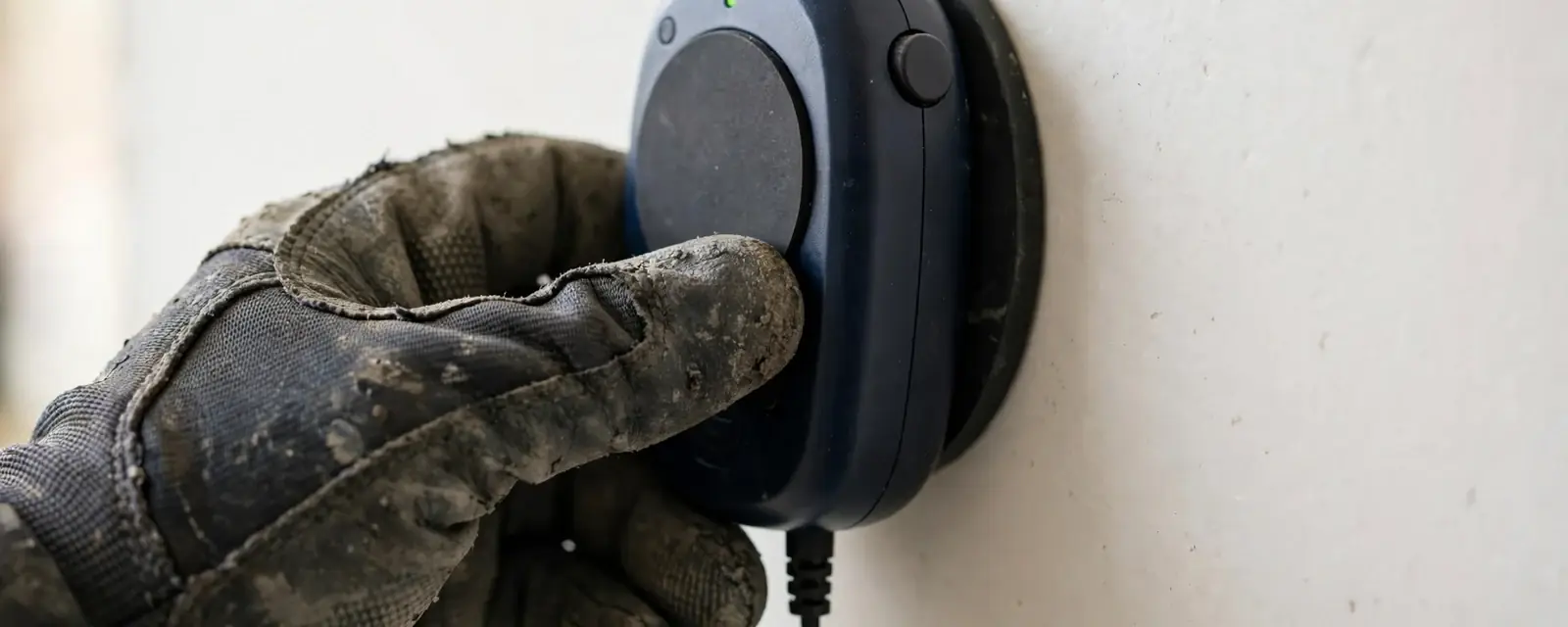
Bill climbing, meter turning, ceiling damp or floor warm?
Water that is running, soaking a ceiling or spreading across a floor is an emergency, and our 24/7 line takes leak detection calls in Millburn, NJ at any hour. Shut the main water valve first, switch off power to any wet area you can reach safely, and move belongings out of the drip path.
Most people notice a symptom long before they know the word for the service. The water bill climbs with no change in habits, the meter keeps turning with every fixture off, a ceiling stain spreads, a floor feels warm underfoot, or pressure sags at every faucet.
Water can travel a long way from the break before it shows. Leak detection is the work of finding the actual spot, which keeps the opening in the wall or floor small.
When a leak is an emergency
A slow stain that has not changed in weeks can wait for a same-day visit, but it still deserves an answer. Some signs cannot wait.
Call right away when you see
- Water visibly running or dripping from a ceiling
- A ceiling that sags or bulges
- Water near outlets, switches or the electrical panel
- A meter that keeps moving after the main valve is closed
Stop the water, then call
Close the main shutoff, open one low faucet to drain the lines, and stay out from under a bulging ceiling. Never touch light fixtures, switches or outlets that are wet or dripping.
Night and weekend calls are handled the same way as daytime ones. The plumber's first job is to stop the damage, then locate the source.
How leak detection finds the leak
No single method works on every leak, so a plumber combines them and narrows the search step by step. The goal is to point at one spot on the pipe before anyone opens a wall.
Isolate with a shutoff test
Closing valves zone by zone shows which part of the system still loses water, such as the hot side, the cold side or the line to one bathroom.
Pressure test the line
The plumber pressurizes an isolated section and watches the gauge. A drop means a leak somewhere in that run.
Listen with acoustic equipment
Sensitive microphones pick up the hiss of water escaping under pressure through floors, walls and soil, and the loudest point marks the likely spot.
Scan for heat and moisture
Thermal imaging shows temperature differences, such as a warm patch over a hot line or a cold wet area behind drywall, and a moisture meter confirms it.
None of these promises a find on every job. Together they make a miss much less likely and let the repair start at the right place.
Water going somewhere unknown? Let us find it.
Tell the dispatcher what the meter and the stain are doing. A licensed plumber will start with the simplest test that narrows the search.
Match the symptom to the likely cause
| Symptom | Likely cause | First check | When to call |
|---|---|---|---|
| Bill higher, habits unchanged | Running toilet or hidden leak | Read the meter with everything off | If the dial still moves |
| Meter turns with all fixtures off | Leak inside the house or on the service line | Close the home main and watch again | Right away if it keeps turning |
| Spreading ceiling stain | Supply or drain line above, roof or condensation | Note if it grows after showers or rain | Same day if it grows or sags |
| Warm spot on a floor | Leaking hot line, or radiant heat | Ask whether heating runs there | If no heat is built into that floor |
| Low pressure at every tap | Service line leak, partly closed valve or failing regulator | Confirm the main valve is fully open | If the valve is open and pressure stays low |
| Musty basement wall | Pipe leak or groundwater seepage | Tape a plastic square to the wall and see which side gets wet | If moisture returns near piping |
| Soggy patch in the yard | Service line or irrigation leak | Close the irrigation valve and watch | If the patch stays wet |
Doing a meter test at home
A meter test takes a few minutes and tells you whether a leak exists at all. It also tells you which side of the home main it is on.
Stop all water use
Close every tap, shut off the ice maker and dishwasher, and make sure nobody flushes.
Read the meter
Find it in the basement or in a box near the curb and note the dial. Many meters have a small low-flow indicator that moves with the tiniest flow.
Wait, then read again
Leave the water alone for an hour or so. A dial or indicator that has moved means water is escaping.
Close the home main
Shut the main valve inside the house and watch again. If the meter keeps moving, the leak is between the meter and that valve.
If the meter stops when the main is closed, the leak is inside the house, and a toilet is the first suspect. Drop food coloring into the tank and see whether it shows in the bowl without flushing.
Millburn is served by NJ American Water, which publishes its water quality report under the Water Quality tab of its site, searched by ZIP, or by calling the utility. That report covers quality, not leaks, but it confirms who supplies your water and whom to ask about the meter.
Ceiling and wall leaks
A stain on a ceiling rarely sits under the leak. Water follows framing and pipes before it drips, so the source may be a few feet away or a floor above. Timing helps. A stain that grows after rain points to the roof, one that grows after showers points to a bathroom above, and one that never stops growing points to a pressurized supply line.
Condensation on a cold pipe or a clogged air conditioner drain pan can look the same, which is why the plumber checks before cutting. A moisture meter and a thermal scan map the wet area so the access hole goes where the water is. Switch off power to any ceiling light that is wet.
Basement and crawlspace leaks
Look low and look for the telltale signs. White crust or green staining at pipe joints, rust on fittings, wet insulation, a damp spot below a hot water tank and a floor that stays wet on dry days all point to plumbing. A basement that wets only after storms usually points to groundwater.
That difference matters in Millburn. When the remnants of Ida hit in September 2021, basements in the South Mountain area filled with water and sewage, and floodwater and a pipe leak call for different fixes.
If your sump pit runs constantly with no rain, the cause may be a leaking supply line, and sump pump installation and repair should come with a check of the pipes. Crawlspaces under additions get the same inspection, with extra attention to pipes hanging in cold air.
Buried and service line leaks
The water line from the street runs underground, so a break shows up as a meter that moves with the home main closed, a soft or unusually green patch of ground, a sound of running water, or weak pressure. Listening equipment follows the sound along the pipe to the loudest point.
Ownership decides who fixes it. NJ American Water owns the service line from the main to the curb stop, and the property owner owns the rest from the curb stop into the building.
NJ American Water began its Lead Service Line Replacement Program in Millburn in August 2024. It says that if the owner's line is lead or galvanized, it will work with the owner to replace it at no direct cost, with costs recovered through a charge on water bills.
If you plan to replace your own portion with your own contractor, the utility asks you to contact it beforehand. Neighbors in Springfield ask the same question, since NJ American Water serves that town too.
Slab leaks, and where they apply
A slab leak is a break in a line that runs under or inside a concrete floor. Whether it applies to your home depends on how the house is built, so check what your floors sit on. In a house with a basement it is uncommon in the main living area, but slabs do show up under additions, garages, sunrooms and some lower-level rooms.
Signs are a warm area on the floor, the sound of running water with fixtures off, damp flooring or a meter that turns. The plumber locates the line first. Options range from a spot repair through a small opening to rerouting the pipe overhead so the slab stays intact, and the right one depends on what the survey finds. If a pipe has failed outright, see burst pipe repair.
Sprinklers, pools, meter boxes and the repair itself
Irrigation. A zone that stays soggy, a sprinkler head that never stops dripping or a sudden pressure drop when the system runs points to a buried irrigation leak. Close the irrigation valve and retest the meter. If the meter stops, the leak is in that system and the plumber can pressure test each zone.
Pools and spas. A pool that loses more than evaporation explains may have a leak in its supply or return plumbing. A bucket test separates evaporation from loss, and the plumbing between the equipment and the house can then be pressure tested.
Yard and meter box. Water pooling around the meter box, or a box that fills, can be on either side of the curb stop, and that line decides who repairs it. Tell the dispatcher what you see.
Repair. Once the spot is found, the fix may be a section of pipe, a new fitting or a reroute. If the pipe keeps failing in different places, the conversation turns to repiping rather than another patch.
What changes the price of leak detection
The price follows how hard the leak is to isolate and reach.
Homeowner insurance often covers sudden water damage but may exclude slow leaks and the cost of the failed pipe, and some policies cover tear-out for access. Check your policy.
Call, describe what you see, and the price is explained before work starts.
Frequently asked questions
Yes. The dispatch line answers around the clock, and a licensed plumber can be sent for an active leak at any hour, with same-day visits when the schedule allows.
While you wait, close the main water valve and keep people away from wet electrical areas.
Water is moving somewhere. Close the home main and watch again. If the meter keeps moving, the leak is between the meter and the valve, and if it stops, the leak is inside the house.
Either way, a plumber can pinpoint the spot.
Usually the search is done before anything is cut. Shutoff tests, pressure tests, listening and thermal scans narrow the leak to one small area.
Only that area is then opened, and no method can promise a find on every job.
NJ American Water owns the line from the main to the curb stop, and the property owner owns the rest from the curb stop into the building.
If a leak is on the owner's side, it is the owner's repair, and the utility asks that you contact it before replacing your own portion with a contractor.
Yes, a hidden leak can run for weeks with no visible sign, and a meter that moves with everything off is the clue. Check it using the home meter test above.
A running toilet is the most common silent cause, so check the tank first.
No. Roof leaks, condensation on cold pipes and a clogged air conditioner drain pan can all stain a ceiling.
The timing of the stain helps tell them apart, and a moisture meter and thermal scan confirm the source before anything is opened.
It can be a leaking hot water line, but it can also be radiant heat. If no heating is built into that floor, treat it as a possible leak.
Close the main if the spot is spreading and call for a leak search.
Still have a question? Call the 24/7 line and talk it through with a dispatcher.