
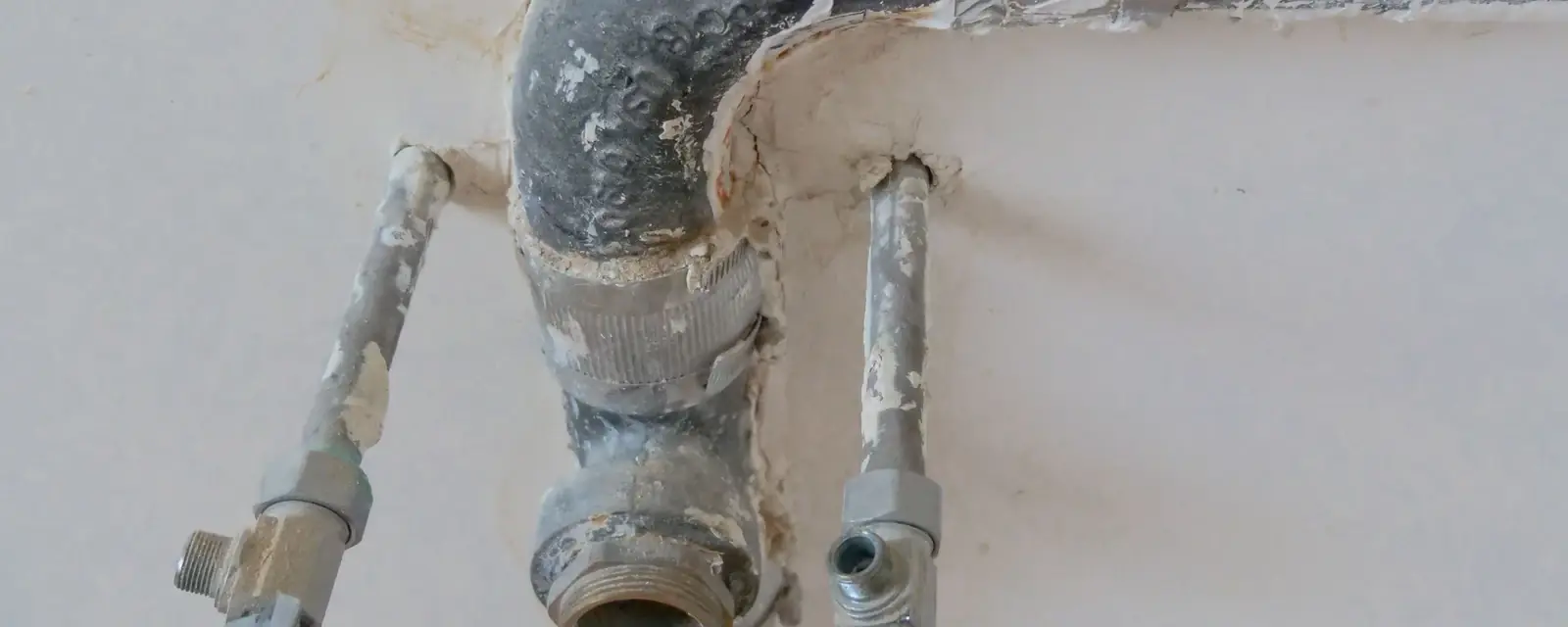
Rusty water, weak pressure and pinhole leaks
Brown or orange water from the tap, a shower that dribbles while the kitchen runs fine, or a pinhole leak that returns after every patch all point to pipes that are wearing out from the inside. Repiping in Millburn, NJ replaces those lines with new pipe so the problem stops coming back. A plumber first confirms the pipe is the cause, since some of these symptoms have simpler fixes.
Signs the pipes may need replacing
- Rusty or discolored water, especially in the morning
- Low pressure at several fixtures at once
- Repeated pinhole leaks in different spots
- Green crust or flaking at joints and fittings
- Pipes that look rusted, pitted or bulged
Repiping inside the house versus the water service line
A repipe replaces the supply lines inside your home, from where the water enters to every fixture. The water service line is the underground pipe that connects the home to the street main. They fail in different ways, cost differently and involve different owners, so it matters which one is the problem.
Water that is discolored at every tap, with a meter that keeps turning, may be a service line problem. Rust that appears at one fixture or on the hot side only usually points to indoor pipes or the water heater. A plumber can tell the two apart in a short visit.
Repipe and galvanized pipe replacement
Galvanized steel is zinc-coated pipe that corrodes from the inside over decades, narrowing the bore until pressure drops and rust shows up in the water. Once the corrosion reaches the fittings, patching one section tends to stress the next. Check what your own pipes are made of, since materials vary from house to house. Older homes are worth checking, but do not assume.
A repipe usually means opening walls and ceilings at selected points, running new lines to each fixture and reconnecting the water heater and valves. Planning the access holes and patching them is part of the job. Most homes stay livable, though water is off for stretches while lines are cut over. Ask for the plan before work starts.
| Material | Strengths | Trade-offs |
|---|---|---|
| Copper | Long track record, tolerates heat, rigid and tidy | Higher material cost, more labor, can pit in aggressive water |
| PEX | Flexible, fewer fittings, faster to run through walls | Not for outdoor sun exposure, needs correct fittings and support |
| Mixed | Copper where exposed, PEX through walls | Needs correct transition fittings |
Neither is right for every house. We recommend based on your layout, water, and what you want to spend, and we do not push brands.
Rusty water or pinholes again?
Call to have a licensed plumber look at the pipes, test the pressure and explain whether a repair or a repipe fits.
Low water pressure, causes versus repipe
Low pressure at every fixture can mean a partly closed main valve, a failing pressure reducing valve, a clogged filter or a service line problem, and none of those needs a repipe. Low pressure at only one fixture is nearly always a clogged aerator or cartridge. A repipe is the answer when corroded galvanized lines have narrowed the pipe so much that flow drops wherever water travels.
Check the simple things first. Open the main valve all the way, look at the filter and test pressure at an outside spigot. If pressure there is strong and weak inside, the narrowing is in the house piping.
Water service line leaks
A leak on the service line shows up as a wet spot or soft ground between the street and the house, a meter that spins with every fixture off, or a drop in pressure with no change inside. Under a lawn or driveway, it can run unseen for a long time. A plumber confirms the location, often with the same methods as leak detection, before anyone digs.
NJ American Water owns the service line from the main to the curb stop, and the property owner owns the rest, from the curb stop into the building. That boundary changes who repairs what, so call the utility early about a leak near the street.
NJ American Water began its Lead Service Line Replacement Program in Millburn in August 2024, identifying line materials by canvassing and inspections. If your portion proves to be lead or galvanized, the company says it will work with you to replace it at no direct cost, with costs recovered through a charge on water bills. An owner who hires their own contractor pays personally and should contact the company first.
Before you replace your own service line
Call NJ American Water before hiring anyone, as the program rules and your options depend on the line material. Do not assume a benefit applies until the utility confirms it for your address.
Copper pipe repair without a full repipe
Copper that has a single pinhole or a failed joint can be repaired with a new section and fittings, and that is often the right call for isolated damage. When pinholes keep appearing in different places, the whole line is wearing thin, and repeated patching costs more than a repipe. If a pipe has already burst, see burst pipe repair for the first steps.
What the utility's tap results tell you
NJ American Water's 2025 sampling of 56 homes in the Short Hills system found a lead 90th percentile of 3 ppb against a 15 ppb action level, with two homes above it, and copper at 0.23 ppm against 1.3 ppm, with none above. The report lists corrosion of household plumbing as the typical source. Test your own tap and ask the utility for its report.
What affects repipe pricing
A repipe ranges from one section of a house to every line in a multi-story home.
Homeowner insurance often does not pay to replace pipes that have simply worn out, though it may cover sudden resulting water damage, so check your policy.
Call, describe the house and the symptoms, and a licensed plumber will give you a clear price before work starts.
We also repipe homes in nearby West Orange. New fixtures or lines added during a repipe fall under plumbing installation, and the plumber can plan both together.
Frequently asked questions
Rust from galvanized pipes is one cause, but a water heater problem or disturbed sediment can look similar. A plumber checks which taps are affected and whether the discoloration is only on hot water. Repiping is the answer only when the pipes themselves are failing.
Repeated pinholes in different places mean the pipe wall is thinning along its length. Patching each one tends to be a temporary fix. A plumber can recommend replacing the affected run or the whole line.
Call, and a licensed plumber will look at the house, the pipe material and the access before naming a price. We give a clear price before work starts. The number depends on size, material and walls.
Yes. Pipe replacement can be a single run, a branch to one bathroom or the whole house. If the remaining pipe is the same age and material, ask what the plumber sees before choosing.
NJ American Water owns the line from the main to the curb stop. The property owner owns the rest, from the curb stop into the building. Contact the utility to confirm for your address.
Only if corroded pipes caused it. Low pressure also comes from the main valve, a pressure reducing valve, a filter or the service line. A plumber checks those first.
It depends on the layout, the water and the budget. Copper is rigid and has a long track record, while PEX is flexible and quicker to run through walls. A plumber can explain which fits your walls.
Still have a question? Call the 24/7 line and talk it through with a dispatcher.