
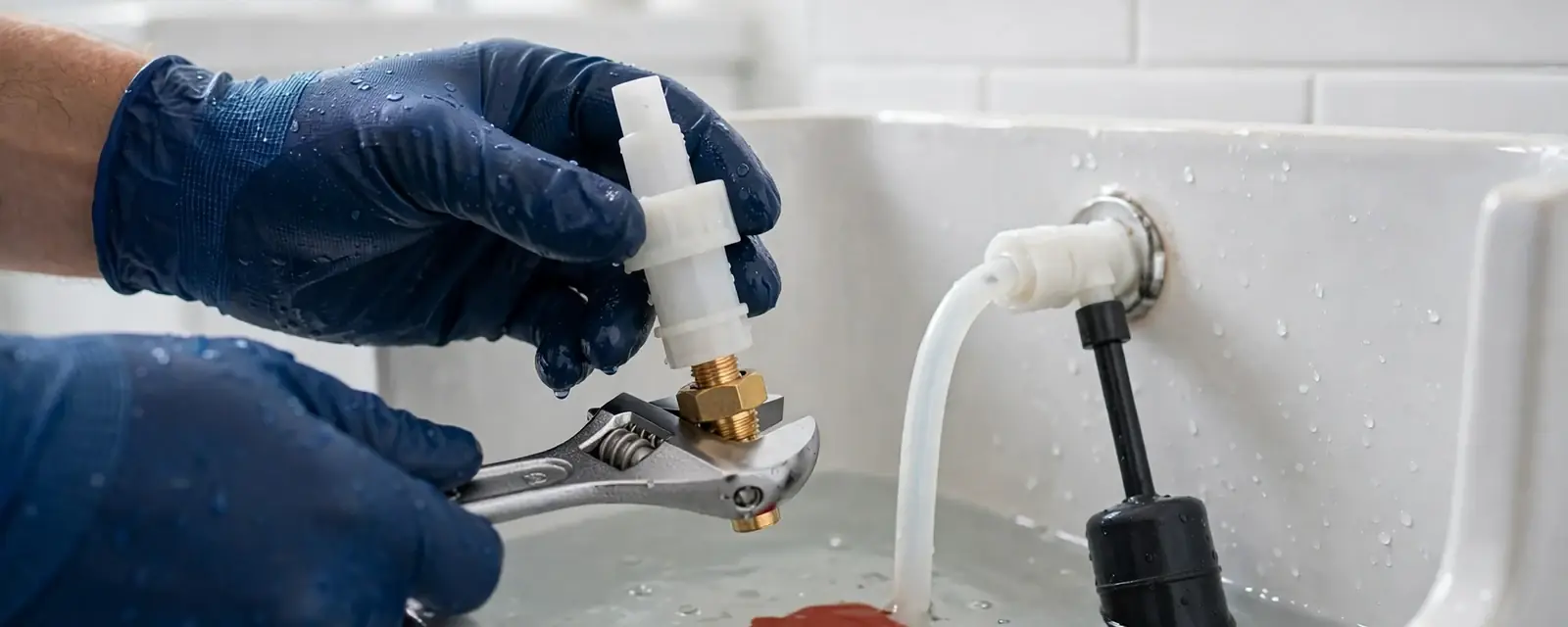
Toilet overflowing or leaking right now
An overflowing or leaking toilet is a toilet repair emergency in Millburn, NJ, and the 24/7 dispatch line is open at any hour for it. Reach behind the bowl and turn the supply valve handle clockwise to cut the water, then stop flushing. If the bowl is still rising, lift the tank lid and press the flapper down.
Lay towels at the base, roll up rugs, and keep everyone away from outlets, fans and space heaters near standing water. Same-day appointments are available when the schedule allows, and after-hours calls reach the same licensed plumbers. Tell the dispatcher whether the water is clear from the tank or dirty from the drain, since that changes the diagnosis.
If other drains gurgle or fill too
When a tub or floor drain also fills as you flush, the blockage is probably in the main drain and not in the toilet. Stop using water in the house and say so on the call. That is a job for drain cleaning, and flushing again only sends more water onto the floor.
Leaks at the base and wax ring failures
Water around the base usually comes from the wax ring or gasket between the toilet and the floor flange. A loose supply connection or a sweating tank can look identical, so dry everything, flush once and watch where the first drops appear. A rocking bowl, a stain on the ceiling below or a soft spot in the floor points to a seal that has been leaking for a while.
The repair means shutting off the water, draining the tank, lifting the toilet and replacing the wax ring or gasket. We reset the bowl, level it and snug the bolts in turns, because overtightening cracks the porcelain. If the subfloor is soft, we say so before going any further.
Signs the base seal has failed
- Water at the base after a flush
- A toilet that rocks when you sit
- A sewer smell in the bathroom
- Stained flooring or a damp ceiling below
- Caulk around the base turning dark or loose
Supply line and shutoff valve trouble
The braided line from the wall to the tank fails at its coupling nuts, and when it lets go it spills at full house pressure. Close the main water valve if the stop behind the toilet will not turn. The shutoff valve itself is a common culprit too, since old multi-turn stops drip at the stem or seize solid.
A plumber replaces the line, and the valve when needed, which often means closing the main briefly. Quarter-turn stops are the usual replacement because you can see at a glance whether they are open or shut. Never force a stuck valve with a wrench, since a snapped stem turns a small drip into a flood.
Toilet still running or leaking?
Shut the supply valve behind the bowl and call the 24/7 line. Licensed plumbers can repair the seal, valve or fill assembly, or replace the toilet.
Fill valve and flapper problems
The fill valve refills the tank after each flush, and the flapper seals the tank against the bowl. When the flapper leaks, water trickles into the bowl and the fill valve restarts every so often. A failing fill valve hisses, refills slowly or never shuts off and sends water down the overflow tube.
Mineral-heavy water shortens the life of both parts, because scale stiffens flapper rubber and fouls the fill valve seat. NJ American Water's 2025 report for the Short Hills system lists hardness from 52 to 342 mg/L, and it does not say which streets get which value. Your tap can differ from your neighbor's, so test yours with a store kit or ask the utility.
Add dye
Put a few drops of food coloring in the tank and do not flush.
Wait
Give it a while with nobody using the toilet.
Look at the bowl
Color in the bowl means the flapper is leaking and needs replacing.
Listen after a flush
Hissing or constant refilling points to the fill valve.
A running toilet and your water bill
A toilet that runs, even as a thin trickle, can waste a lot of water over a month, and you pay for every gallon without ever seeing a puddle. If the water bill climbs and no faucet drips, a silent flapper leak is the first place to look. The fix is usually a small part, which makes it one of the cheapest ways to cut water use.
A cracked or loose flange
The flange is the ring on the floor pipe that the toilet bolts down to. If it cracks, corrodes or sits too low, the bowl rocks and the seal never holds, no matter how many wax rings you stack. Repair options include a metal repair ring or replacing the damaged section, and a plumber checks the subfloor at the same time.
Clogs a plunger will not clear
A flange plunger and a closet auger clear most bowl clogs, but a toilet that clogs again within days has a deeper problem. Wipes labeled flushable, toys and too much paper are the usual causes, and a partial blockage further down the line behaves the same way. Call for drain cleaning when other fixtures drain slowly or gurgle.
Repair or replace the toilet
| Symptom | Usually | Reason |
|---|---|---|
| Running or hissing tank | Repair | Flapper or fill valve is cheap to swap |
| Leak at the base | Repair | Wax ring or gasket is the likely cause |
| Hairline crack in the bowl or tank | Replace | Cracked porcelain cannot be sealed for good |
| Repeated clogs in an old, low-flow bowl | Replace | The trap design may be the problem |
| Constant rocking from a damaged flange | Repair first | Fix the flange, then reset the bowl |
When replacement wins, our plumbing installation crews set the new bowl, new supply line and new seal together. Toilet calls from nearby Maplewood get the same treatment. A leak at the sink next to the toilet is a faucet repair call.
Toilet repair prices depend on what has failed and what lies underneath it.
Homeowner policies often cover sudden water damage from a failed supply line but may not cover a slow leak that went unnoticed, so check your policy.
Call the 24/7 line and you will hear a clear price before work starts.
Frequently asked questions
Yes. The dispatch line runs 24/7, so an overflowing or leaking toilet at 3 a.m. gets the same licensed plumbers as a weekday call. Close the supply valve behind the bowl, stop flushing and tell the dispatcher what you see.
Water pooling around the base after flushing, a bowl that rocks, or a damp spot on the ceiling below all point to it. A sewer smell near the toilet is another clue. Replacing the wax ring means lifting the toilet, so it is a repair for a plumber if you are unsure.
Yes. A failing fill valve is a standard part swap that leaves the bowl and tank in place. Hissing, slow filling and a tank that never stops running are the usual signs.
Yes. The plumber closes the main, swaps the old stop for a quarter-turn valve and fits a new supply line if needed. Do not force a stuck handle, since a broken stem can release a lot of water.
It is better not to. The water seeps into the subfloor, and a small leak can rot the wood over time. Shut the supply valve and call so the seal can be replaced before the floor is damaged.
Scale can stiffen a flapper and foul a fill valve, so parts in mineral-heavy water often need replacing sooner. The utility's 2025 report lists hardness in the Short Hills system from 52 to 342 mg/L, so your own tap may differ. Test it and replace parts as the results suggest.
Yes, because the waste is silent and shows up only on the water bill. The cure is often a flapper or fill valve. If the toilet is old and cracked, ask about replacement.
Still have a question? Call the 24/7 line and talk it through with a dispatcher.