
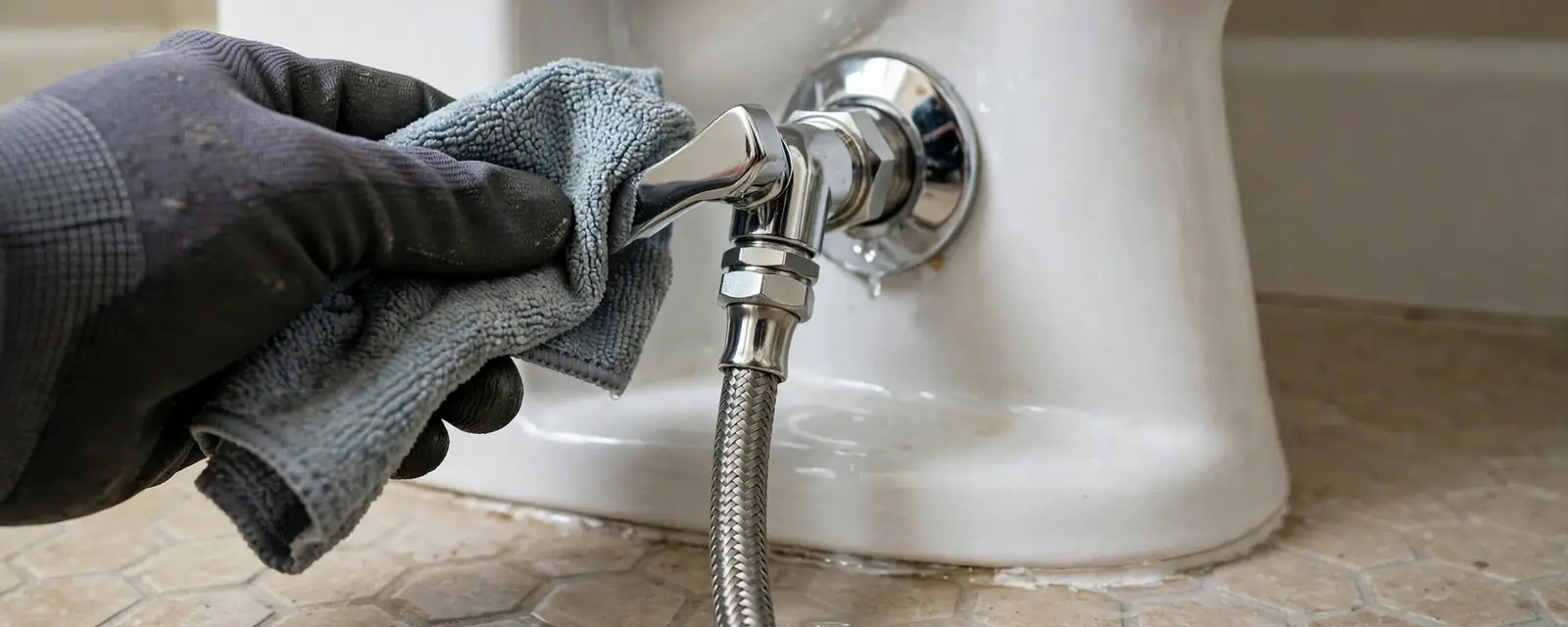
Start here, symptom by symptom
Toilet plumbing repair in Millburn, NJ starts with the symptom, because each one points at a different part. A running toilet means the flapper or fill valve is not sealing. A weak flush often means blocked rim jets. Water at the base means a failed wax ring, and a rocking bowl means loose bolts or a damaged flange.
| Symptom | Usual cause | DIY? |
|---|---|---|
| Runs or refills on its own | Worn flapper or fill valve | Yes |
| Weak or slow flush | Blocked rim jets or low tank level | Yes |
| Clog that plunging clears | Waste or too much paper | Yes |
| Water pooling at the base | Failed wax ring or loose bolts | Maybe |
| Bowl rocks or shifts | Loose bolts or a broken flange | Maybe |
| Repeated clogs or other drains slow | Deeper line problem | Call |
| Stained ceiling below the bathroom | Leak at the base or supply | Call |
The toilet that will not stop running
Lift the tank lid and look. If water trickles into the overflow tube, the float or fill valve is set too high or is not shutting off. If the water level looks right but the tank keeps refilling, the flapper is leaking into the bowl.
Add a few drops of food coloring to the tank and wait without flushing. Color in the bowl proves a flapper leak.
Shut off the supply
Turn the valve on the wall behind the toilet clockwise, then flush to empty the tank.
Replace the flapper
Unhook it, take the old one to match the size and style, and fit the new one on the same pegs.
Check the chain
Leave a little slack so the flapper can fully close.
Adjust the float
Set the water level at the mark in the tank, about an inch below the overflow tube.
Replace the fill valve if needed
If it still runs, a new fill valve is a common DIY swap with a wrench and a bit of patience.
The weak flush
Water enters the bowl through small holes under the rim. When mineral scale narrows them, the flush loses force. Look under the rim with a mirror, and clear the holes with a small brush or wire after soaking them with vinegar. Also check the tank level and the chain, since a low tank or slack chain gives a short flush.
Do not use drop-in bleach tablets
Chlorine tablets that sit in the tank can attack rubber flappers and seals and shorten their life. Clean the bowl with a brush and leave the tank alone.
Toilet leaking or overflowing?
Shut the valve behind the toilet and call the 24/7 line. A licensed plumber can take it from there.
Water around the base
Wipe the area dry, then check whether the water comes from the supply line, the tank bolts or the base. If it comes from the base, the wax ring is failing or the bolts are loose. Tighten the bolts gently, because porcelain cracks. If the leak continues, the toilet has to come up for a new wax ring.
That repair is within reach for a careful homeowner, but toilets are heavy and the flange underneath matters. A cracked flange or soft, stained subfloor is not a DIY repair. A slow leak that has been soaking the floor may be a job for leak detection to confirm where the water is really coming from.
The wobbly bowl
A toilet that rocks is breaking its seal every time someone sits. Snug the closet bolts a little at a time and add plastic shims if the floor is uneven. If the bolts spin or the flange is broken, the fix is a flange repair, and that is when to hand it to a licensed plumber.
The clog
A safe order for clearing a clog
- Use a flange plunger, not a cup plunger, and push and pull steadily to keep the seal.
- Try a closet auger if plunging fails, feeding it gently to avoid scratching the porcelain.
- Skip chemical drain cleaners, which can damage fittings and hurt anyone working on the line.
- Stop and call if other drains gurgle or the water will not go down. That suggests the problem is farther along the line.
When to replace the toilet instead
- A crack in the bowl or tank, even a hairline one that weeps.
- Repeated clogs with a drain that tests clear, which suggests a poor flushing design.
- A rocking base on a floor that cannot be shimmed or repaired.
- Repairs that stack up, such as a flapper, a fill valve and a wax ring in the same year.
- Rust or mineral staining in the tank that comes back after every part replacement.
A full toilet replacement is a larger job than most repairs, since it involves a new wax ring, a check of the flange and the supply connection. A plumber can show you whether repair or replacement is the better use of money before you buy parts.
What drives toilet repair cost
A toilet repair can be a small part or a floor job, and these factors explain the difference.
Insurance often covers sudden water damage from a failed supply line but not the cost of replacing a worn toilet, so check your policy.
Call the 24/7 line and describe what the toilet is doing. We will give a clear price before work starts.
Near Millburn, same toilets
Our team handles toilet repair in Millburn and also travels to West Orange and Summit. Most toilet failures involve a handful of standard parts, and the same flappers, fill valves and wax rings turn up in every town.
Millburn, NJ: what hard water means for your flapper and fill valve
NJ American Water's 2025 report for the Short Hills System lists total hardness at 52 to 342 mg/L, with 342 mg/L as the 2024 maximum. The secondary limit is 250 mg/L. The report does not say which streets get which value, so your tap can differ from your neighbor's.
Mineral scale is what hard water leaves behind. It crusts on flapper seats so they stop sealing, clogs the screen in a fill valve and narrows the rim jets that give the flush its force.
When a toilet runs or flushes weakly more than once, test your tap with a hardness kit and ask the utility, and expect to replace flappers and fill valves more often if the water is hard.
Source type: NJ American Water 2025 Annual Water Quality Report, Short Hills System
Frequently asked questions
It can be. The utility's 2025 Short Hills report lists hardness from 52 to 342 mg/L, so your tap may differ from a neighbor's. Scale can keep a flapper from sealing or clog a fill valve.
Test your tap and replace the flapper or fill valve if they look crusty.
Use food coloring. Color in the bowl means the flapper leaks. If the water reaches the overflow tube and keeps running, the fill valve or float is the cause.
Many careful homeowners can, with the water shut off and a helper to lift the toilet. A cracked flange or a soft floor means call a licensed plumber instead.
Too much paper, flushable wipes and low-flow bowls with weak flushes are common reasons. If several drains are slow, the cause may be in the main line.
Chlorine tablets can damage rubber parts in the tank. If you want to clean the bowl, use a brush and leave the tank alone.
Permit rules vary, so ask the Millburn building department. Like-for-like swaps usually raise few questions, but moving a toilet or changing the drain is different.
Still have a question? Call the 24/7 line and talk it through with a dispatcher.