
What a sump pump installation involves in Millburn, NJ
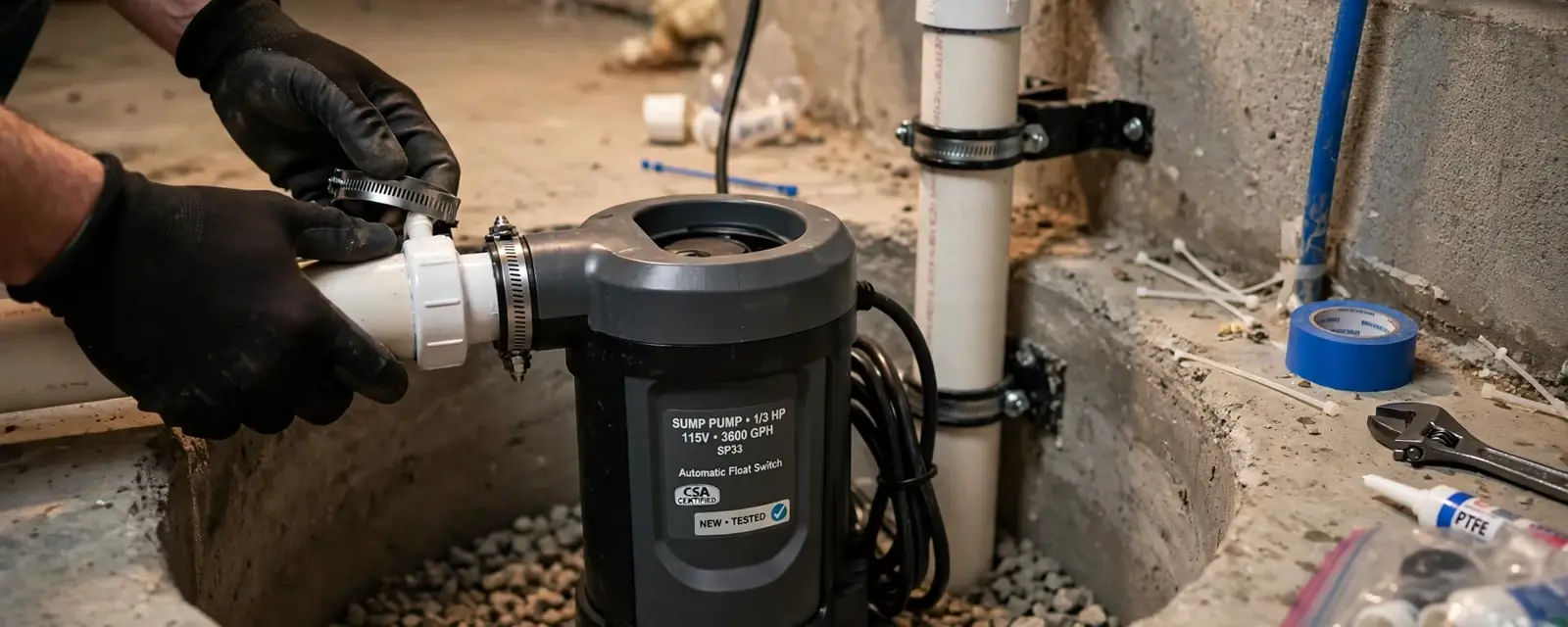
A sump pump installation in Millburn, NJ has five working parts. A pit collects groundwater, a pump moves it, a check valve stops it falling back, a discharge pipe carries it outside, and a power supply keeps the whole thing running. The pump is the easy piece. The pit and the discharge line are where the labor, and most of the mistakes, live.
Dropping a new pump into an existing pit is a job many handy homeowners can do. Cutting a new pit in the slab, tying into drain tile or running a new discharge line is a different job. It involves concrete, groundwater and household electricity, and that is where a licensed plumber should take over.
The five parts, one at a time
The pit
A basin set into the slab so groundwater collects in it. It needs a firm, level base, usually a bed of gravel, and a lid to keep debris out.
The pump
A submersible pump sits inside the pit and runs quietly. A pedestal pump keeps its motor above the pit, is easier to reach and is usually louder.
The check valve
Fitted on the discharge pipe just above the pump, it stops the column of water from dropping back into the pit every time the pump shuts off.
The discharge line
The pipe that carries water out of the house. It needs a steady slope away from the foundation and an outlet that does not send water back toward the wall.
Power and backup
The pump needs its own grounded outlet protected by a GFCI. Storms often cut power, so a battery backup or a second pump is worth asking about.
Installation steps, from slab to test run
Pick the low spot
Find the corner where water collects first, ideally near an outlet and an exterior wall so the discharge run stays short.
Open the slab
Cut the concrete with a saw, break it out, dig to the depth of the basin and lay a gravel bed. This is the heavy, dusty part of the job.
Set the basin and pump
Level the basin, backfill around it and lower the pump in so the float can swing freely without touching the wall.
Plumb the discharge
Run pipe up from the pump, install the check valve with its arrow pointing away from the pump, and carry the line out through the wall or rim joist.
Test before you trust it
Pour water into the pit until the float lifts, watch the pump run and shut off, and check every joint for drips.
Water and electricity share this pit
Unplug the pump at the outlet before you touch it, and never stand in water to do so. If there is already water on the floor near outlets, stay out and call a licensed plumber.
Pit flooding or a pump that will not start?
Call the 24/7 line and a licensed plumber can look at the pit, the float and the discharge.
DIY or call a plumber
The honest split is simple. Work that reuses what is already in the floor is within reach for many homeowners. Work that changes the floor, the wiring or the route water takes is not. Permit rules vary, so ask the Millburn building department before you start anything beyond a like-for-like swap, and do not assume a DIY install meets code.
| Situation | DIY? | Why |
|---|---|---|
| Replace a failed pump in a working pit | Often | Same pit and discharge. Replace the check valve at the same time. |
| Add a check valve to an existing line | Often | Needs a clean cut, the right fitting and the arrow facing away from the pump. |
| Cut a new pit in the slab | Call | Concrete, depth and drain tile all matter, and mistakes are costly to undo. |
| Run a new discharge line outside | Call | Slope, freezing exposure and where the water lands decide whether it works. |
| Add battery backup or a second pump | Call | Extra wiring and extra plumbing on the discharge line. |
| Pit fills but the pump never starts | Call | Could be a tripped breaker, wiring or a failed switch rather than the pump. |
Mistakes that make a new pump fail
Most failed installs trace back to a short list of errors. A pump set in a pit that is too small will short cycle and wear out early. A discharge line that ends beside the foundation just feeds the same water back into the soil.
Common causes of an early failure
- No check valve, so the pump restarts again and again.
- A float that snags the pit wall and never lifts.
- A discharge pipe connected to the household drain, which is not an approved place for groundwater. Ask the building department where discharge may go.
- No backup when the power drops during a storm.
- A pump sized without checking how high the water must be lifted.
If water keeps arriving through the walls or the floor joint, a pump only manages the symptom. That is a job for basement waterproofing, and it is often done alongside the pump.
What changes the price of a sump pump installation
Two homes can need very different work, so these are the factors that move the total.
Standard homeowner policies often exclude groundwater and seepage, and sump pump overflow is frequently covered only by an added endorsement, so check your policy before storm season.
Call the 24/7 line and describe the pit, the pump and where the water goes. We will give a clear price before work starts.
Pump advice that carries across the township line
Millburn shares more than 2,000 acres of South Mountain Reservation with its neighbors. That is why the same questions come up in Maplewood and West Orange. Where does the water in the pit come from, and where does the discharge go?
For a failed pump, a stuck float or a new install, sump pump installation and repair is the service to call. We dispatch around the clock, and a pump that quits in a storm is exactly that kind of call.
Millburn, NJ: what Ida taught basement owners about pumps
The remnants of Ida hit on the night of September 1, 2021. Rain averaged almost eight inches in under 24 hours, the West Branch of the Rahway River overflowed into the streets, and in the South Mountain area basements filled with water and sewage. Millburn had flooded before, in Hurricane Floyd in 1999 and Hurricane Irene in 2011.
A 2019 Army Corps flood plan that included a dam in South Mountain Reservation stalled, so homeowners cannot count on a regional fix.
The practical takeaway is narrow. A sump pump handles groundwater reaching your pit. It does not stop river water coming through walls or a sewer backing up through a floor drain. Size the pump for a big storm, add battery backup and keep the discharge pointed well away from the house.
Source type: ENR and Patch reporting on Hurricane Ida in Millburn
Frequently asked questions
Not on its own. Reports say basements there filled with water and sewage after the West Branch of the Rahway overflowed. A pump moves groundwater out of a pit, but it cannot hold back river water through walls or stop a sewer from backing up.
A pump with battery backup and a well-placed discharge helps in ordinary heavy rain. Treat it as one layer, not the whole answer.
Permit rules vary, so ask the Millburn building department before you cut a slab, change wiring or alter drain plumbing. New Jersey's plumbing subcode is based on the National Standard Plumbing Code, but your own project may still need review.
A missing or stuck check valve is the usual cause, because water falls back into the pit and triggers the float again. A pit that is too small or a float snagging the wall can do the same.
Groundwater should not be sent into the household sewer. Rules on where discharge may go vary, so ask the Millburn building department. Most installs run the pipe outside and away from the foundation.
Pour a bucket of water into the pit until the float lifts. The pump should start, empty the water and shut off cleanly. If it hums, rattles or does nothing, call before the weather turns.
It depends on how fast water enters the pit and how high it must be lifted to reach the discharge outlet. A plumber sizes it from those two things, not from the square footage of the basement.
Still have a question? Call the 24/7 line and talk it through with a dispatcher.