
What drives main sewer line cleaning cost
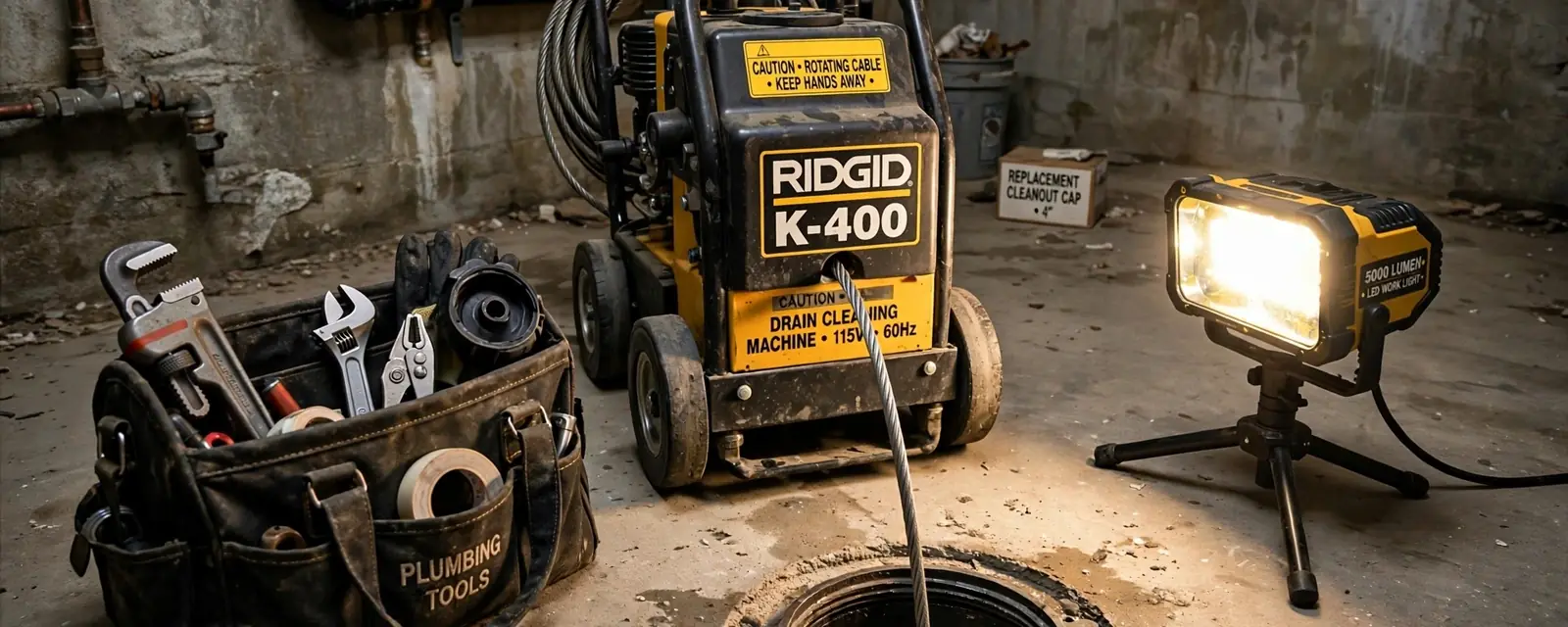
Main sewer line cleaning cost in Millburn, NJ depends on four things. They are the method used, how long and deep the line is, what is blocking it, and whether a camera is needed to see the pipe. A short run with a soft clog is a simple job. A long line packed with roots takes more time and heavier equipment.
A cleaning is a fix when the pipe is sound and something is sitting in it. It is not a fix when the pipe itself is broken, bellied or collapsed. A camera tells the two apart.
How to tell the main line is the problem
Signs the blockage is in the main, not one drain
- Several fixtures drain slowly at once, such as a tub, a toilet and a sink.
- A toilet gurgles or bubbles when the washing machine drains.
- The lowest drain in the house, often a basement floor drain or shower, backs up first.
- Water comes up in the tub when you flush.
- A sewer smell near the cleanout or floor drain.
Sewage on the floor
Stop using water in the house, including the washer and dishwasher. Keep people and pets out of the wet area, avoid touching the water, and call the 24/7 line. Sewage carries bacteria, so do not clean it up with bare hands.
Snake, jet or camera
| Method | What it does | Best for | Limits |
|---|---|---|---|
| Snake (cable machine) | A rotating cable cuts through or pulls out a blockage | Soft clogs and roots in a clear path | Leaves some residue on the walls |
| Hydro jetting | High-pressure water scours the pipe wall clean | Grease, scale and heavy buildup | Not for a pipe that is cracked or collapsed |
| Camera inspection | A small camera shows the inside of the pipe | Finding the cause and the damage | Only inspects, it does not clear the pipe |
In practice the tools work together. A cable opens a stopped line, a camera checks what caused the blockage, and hydro jetting washes the walls when grease or scale are the problem. Jetting a damaged pipe is a bad idea, which is why the camera comes first.
Drains backing up in more than one spot?
Call the 24/7 line. A licensed plumber can clear the main line and run a camera to see why it blocked.
What moves the price of a main line cleaning
Cleaning prices vary a lot between houses, and these factors explain why.
Insurance often excludes a backup caused by a clog or tree roots unless you added water backup coverage, so check your policy and ask your agent before a storm.
Call the 24/7 line and describe which drains are acting up. We will give a clear price before work starts.
What a cleaning visit looks like
The plumber starts at the cleanout, the capped pipe usually found near the foundation or in the basement. Without a cleanout, access may come through a toilet flange or roof vent, which takes longer and carries more risk to the fixture.
Locate the cleanout
Find the access point closest to the blockage and confirm which drains are affected.
Open the line
A cable machine cuts through the blockage, or a jetting hose washes it out if the pipe allows.
Flush and test
Water is run through the system to confirm the line flows freely.
Inspect with a camera
The camera checks for roots, cracks, bellies and leftover buildup.
Talk through the findings
You see what was found and whether the line needs maintenance or repair.
Is cleaning a fix or a stopgap?
A one-time clog from a heavy flush or a wad of wipes usually clears for good. A line that backs up again and again is telling you something else. Roots entering at a joint will grow back, a belly will keep collecting solids, and a cracked pipe will keep letting soil in.
When cleaning does not hold, the camera findings decide the next step. Our sewer line cleaning team starts with clearing the line, and anything the camera shows beyond a simple blockage moves into repair territory.
A sensible order of operations
- Stop using water and confirm the drains affected.
- Open the line with a cable or jet it, depending on the blockage.
- Run a camera to see the cause.
- Decide between maintenance cleaning, a spot repair or a larger fix.
Habits that cut down on repeat blockages
- Keep grease, coffee grounds and wipes out of the drains, even the ones labeled flushable.
- Know where your cleanout is, and keep it accessible.
- Watch for slow drains and gurgles early, since small blockages grow.
- Have a camera look at an older line that has backed up more than once.
- Keep large trees in mind when planning near the line, because roots follow moisture to pipe joints.
None of this prevents every clog. It does make the next one smaller, cheaper to clear and less likely to arrive in the middle of the night.
Nearby towns, the same logic
The same method applies in Summit and Springfield. A first backup deserves a cleaning and a camera, a repeat one deserves a repair conversation, and a storm backup deserves a look at what is happening outside the property.
Millburn, NJ: Ida, heavy storms and the sewer line
When the remnants of Ida hit on the night of September 1, 2021, rainfall averaged almost eight inches in under 24 hours. The West Branch of the Rahway River overflowed into the streets, and in the South Mountain area basements filled with water and sewage.
Whether a cleaning would have helped depends on the cause. If your own line is clogged, a cleaning clears it and the camera shows what caused it. If the public system or ground is overloaded, a clean pipe still backs up, because cleaning cannot make room for more water than the system can carry.
The practical test is simple. If only your house backs up, suspect your own line. If many houses are affected during a major storm, a cleaning will not stop it, and a backwater valve is worth asking a plumber about. Permit rules vary, so ask the Millburn building department first.
Source type: ENR and Patch reporting on Hurricane Ida in Millburn
Frequently asked questions
Only if your own line is the problem. After Ida, South Mountain area basements filled with water and sewage, and a clean pipe cannot help when the system outside is overloaded.
If only your house backs up, a cleaning and a camera are the right first steps.
A cable is quick for a soft clog or roots in a clear pipe. Jetting washes the walls and suits grease and scale. A camera tells you which fits and whether the pipe can take jetting.
Look at the pattern. If several fixtures slow at once, or the lowest drain backs up first, the main is the suspect. One slow sink is usually its own branch.
It clears the roots in the pipe, but they can grow back if they enter through a crack or joint. A camera finds the entry point so you can decide on a repair.
No. Chemical cleaners can sit in the pipe and make it harder to work on safely. Stop using water and call a licensed plumber.
It is a valve on the sewer line that lets waste flow out but closes against flow coming back. Ask a licensed plumber whether it suits your house and ask the building department about permits.
Still have a question? Call the 24/7 line and talk it through with a dispatcher.