
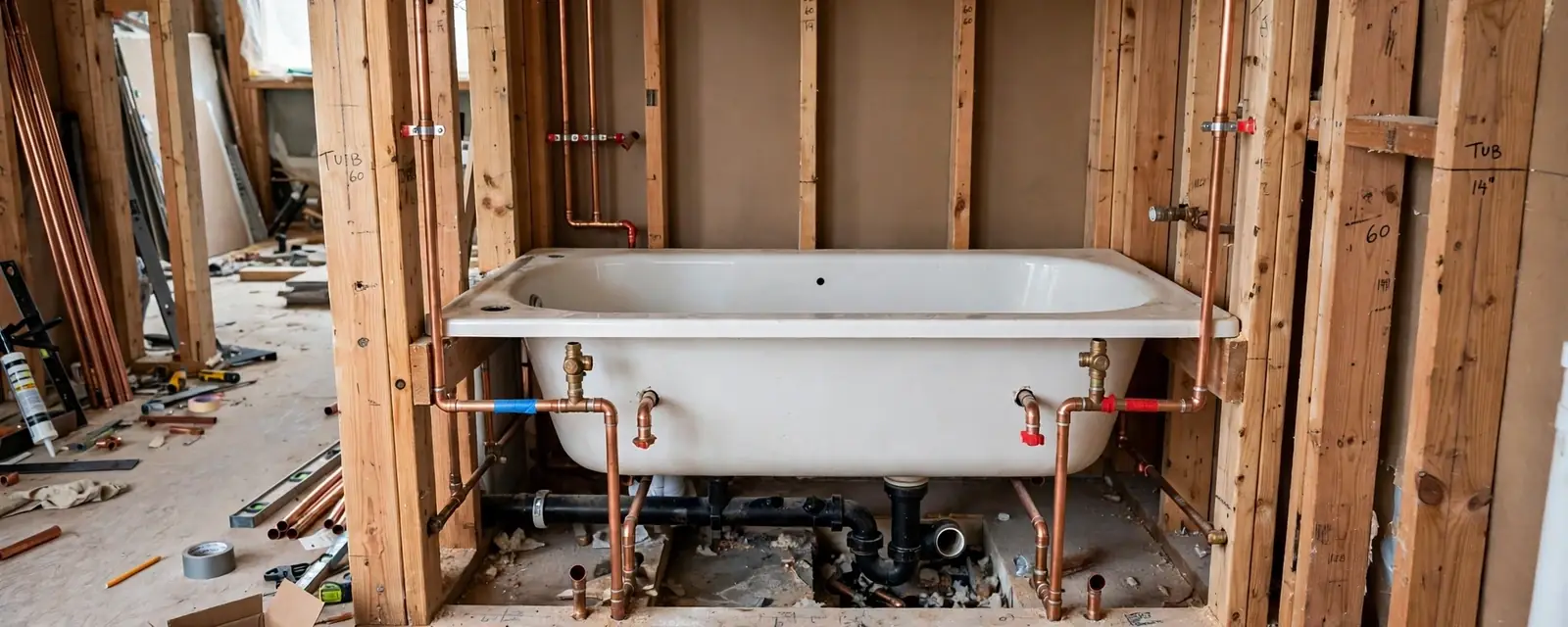
How a tub is plumbed, in one picture
To plumb a tub in Millburn, NJ, you connect two separate systems. Fresh water arrives through hot and cold supply lines to a valve in the wall and leaves through the spout or showerhead. Used water leaves through a drain and overflow, drops through a trap and runs into a vented drain line.
Everything visible is trim. The real work sits behind the wall and under the floor. That is why swapping a spout or stopper is a homeowner task, while moving a tub or changing its drain is not.
The drain side
Drain and overflow
At the low end of the tub sits the drain shoe, with a strainer or stopper on top. A second opening higher on the end wall is the overflow, which catches water before it spills over the rim. Both connect below the tub through a short tee.
The trap
From the tee, the pipe drops into a P-trap, a curved section that always holds a little water. That water seal blocks sewer gas from rising through the tub. A dry or leaking trap is a common source of a musty bathroom smell.
The vent
Past the trap, the drain line connects to a vent that runs up through the roof. The vent lets air in behind the water so the drain flows freely and the trap seal does not get pulled out. A gurgling tub and a slow drain together often point at a vent or main drain problem.
The supply side
Hot and cold lines feed a mixing valve behind the wall. Modern valves are usually single-handle pressure-balancing or thermostatic units, which help keep the temperature steady when a toilet flushes or a tap opens elsewhere. Inside is a replaceable cartridge, and that cartridge is where most drips and temperature complaints start.
From the valve, water goes up to the showerhead or out to the tub spout. A diverter, either in the spout or on the valve, decides which. When the diverter wears out, water dribbles from the shower while the tub is running. A worn cartridge or trim is a classic job for faucet repair.
Tub draining slowly or leaking behind the wall?
Call the 24/7 line and a licensed plumber will trace whether it is the trap, the vent or the valve.
Signs the plumbing behind the tub needs attention
Symptoms worth acting on
- A stain or damp patch on the ceiling or wall below the tub, which often means a leaking overflow gasket or drain connection.
- A musty smell from the tub when it has not been used, which can point to a dry trap.
- Water that pools around the drain long after the tub is emptied, a sign of a partial clog or poor slope.
- Hot water that suddenly turns scalding or cold when a toilet flushes, usually a worn or stuck valve cartridge.
- Soft or discolored tile and grout near the valve, where a slow leak may be soaking the wall.
None of these needs panic, but none should be ignored for long. A slow leak behind a tiled wall can rot framing before any puddle appears, so have it traced early.
Roughing in a tub, in order
Set the tub and drain
The tub is placed on a firm, level base, and the drain and overflow are connected beneath it with watertight joints.
Connect the trap and drain line
The trap ties into the branch drain at the correct slope, and that branch connects to the vent.
Run the supply lines
Hot and cold lines go to the valve body, which is fixed at the right depth for the finished wall.
Pressure test
Lines are checked for leaks before anything is closed up behind tile or an access panel.
Install the trim
Spout, handle and stopper go on last, once the wall surface is finished.
An access panel saves a wall
When a tub backs onto a closet or hallway, an access panel behind the valve makes later repairs far easier. Ask a plumber about adding one before the wall is finished.
What a homeowner can do and what to hand off
| Job | Homeowner? | Notes |
|---|---|---|
| Clear hair from the strainer | Yes | A drain snake or plastic hair tool does the job without chemicals. |
| Replace a stopper or overflow plate | Yes | Check which style you have before buying parts. |
| Swap a tub spout or showerhead | Yes | Seal threads and avoid overtightening. |
| Replace a valve cartridge | Sometimes | Shut off the water first and match the exact cartridge. |
| Re-caulk the tub edge | Yes | Dry the surface and use a bathroom-rated sealant. |
| Move or replace the tub drain | Call | Slope, trap and vent all have to work together. |
| Replace the valve body in the wall | Call | Needs soldered or fitted connections inside the wall. |
| Add a new bathroom or tub location | Call | New supply, drain and vent runs. |
All the work on the plumber side of that table benefits from a licensed plumber working to the subcode. Our plumbing installation team handles tub, valve and drain work, and can tell you what the job involves before it starts.
What shapes the cost of tub plumbing work
Tub jobs range from a cartridge to a full rough-in, and these factors decide where yours falls.
Insurance often covers sudden water damage from a failed supply line or drain but usually not the cost of replacing worn plumbing itself, so check your policy before assuming.
Call the 24/7 line, describe the tub and what is behind it, and a clear price comes before work starts.
Same questions in nearby towns
We also dispatch to Livingston and Summit, and the tub questions are the same there. Where is the valve, what does the drain connect to, and can the wall be opened without surprises? The honest answer comes from looking at the actual bathroom.
Millburn, NJ: the plumbing subcode and the permit question
New Jersey's plumbing subcode is based on the National Standard Plumbing Code, which the state's Department of Community Affairs adopts. A new edition was reported adopted in 2024. That is the rulebook a licensed plumber works to when drains, vents and valves are changed.
What it means for your tub is simple. Permit rules vary, so ask the Millburn building department before moving a drain, adding a bathroom or touching the vent. Cosmetic swaps like a spout or stopper usually raise no question, but a quick call costs nothing. Do not assume that a DIY drain change meets code just because it holds water.
Source type: NJ Department of Community Affairs plumbing subcode
Frequently asked questions
New Jersey's plumbing subcode is based on the National Standard Plumbing Code. For specifics on your project, including whether a permit applies, ask the Millburn building department, since permit rules vary.
Every fixture drain needs a path for air, though it can share a vent with others through the way the drain lines are laid out. Layout matters, so a plumber should plan any new connection.
Gurgling usually means air is struggling to enter the drain, which suggests a partial vent blockage or a drain clog further down. If it happens with other fixtures too, the main line may be involved.
Changing the cartridge is realistic for many homeowners with the water shut off. Replacing the valve body means cutting into supply lines inside the wall, and that is a licensed plumber's job.
The diverter is probably worn and letting water past. It is often a small part and a simple fix, whether it sits in the spout or on the valve.
Yes. The overflow tube joins the drain below the tub, which is why a leaking overflow gasket can show up as a stain on the ceiling underneath.
Still have a question? Call the 24/7 line and talk it through with a dispatcher.