Hot water that turns cold mid-shower, or a unit showing an error
The shower is fine for a minute, then it goes lukewarm or cold, or the display flashes a code and the unit shuts down. People often assume the heater is dying. More often it is scale on the heat exchanger, a clogged inlet screen, a flow problem or a vent fault.
Tankless water heater service in Millburn, NJ starts by working out which of those it is. This page covers flushing, the faults that show up most, and how to decide between repair and replacement.
Why scale builds up in a tankless unit
A tankless unit heats water as it passes through a small heat exchanger, so every drop meets very hot metal. Dissolved minerals come out of the water when it is heated and stick to that metal. NJ American Water's 2025 report for the Short Hills System lists total hardness from 52 to 342 mg/L, so your tap can differ from a neighbor's.
Scale narrows the passages, so the unit works harder, overheats, throws error codes and finally shuts down. Water arrives lukewarm as flow drops. Test your tap with a hardness strip or a lab test, since the report does not say which streets get which value.
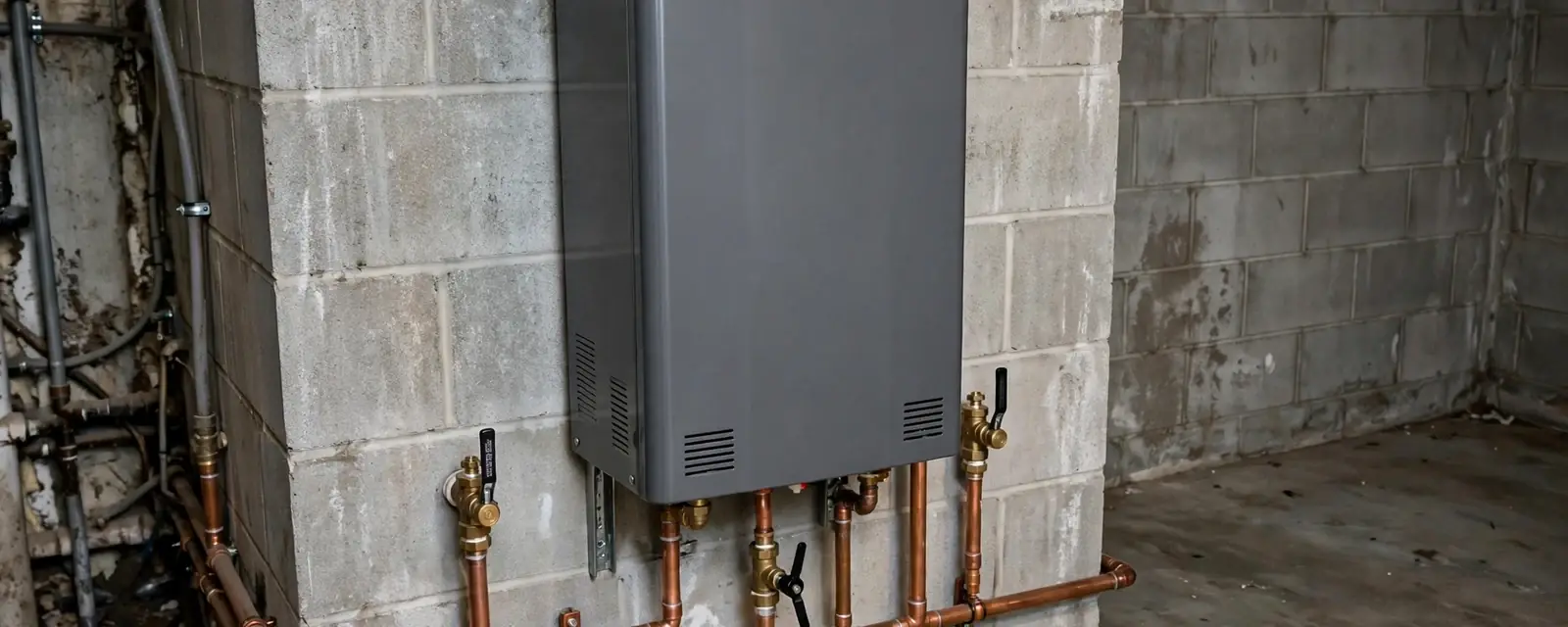
A flush reverses the problem. The plumber closes the isolation valves, connects hoses and a small pump, circulates a descaling solution through the exchanger, then rinses. Units installed without isolation valves need them added first. The right interval depends on your water and the maker's manual.
Faults that show up most often
| What you see | Often the cause | What a visit does |
|---|---|---|
| Water goes cold after a minute or two | Scale, clogged inlet screen, low flow | Flush, clean the screen, check flow |
| Error code, then shutdown | Ignition, vent, sensor or scale | Read the code, test the part it names |
| Lukewarm at a low tap setting | Flow below the unit's minimum | Check fixtures and aerators |
| Cold burst between two hot uses | Cold water sandwich effect | Explain settings, check plumbing layout |
| Water near a condensing unit | Blocked condensate line or a leak | Clear the line, test joints |
Tankless unit acting up?
Call with the brand, the model and any error code. The dispatcher can tell you whether the unit can be serviced.
Install, repair or replace a tankless water heater
A tankless unit far from the end of its life is usually serviced, not replaced. Scale, a dirty filter, a failed sensor or igniter and a blocked vent are parts and cleaning jobs, and repairing them makes sense on a younger unit.
Replacement enters the picture when the heat exchanger itself has failed or leaks, when repeated codes follow every repair, or when parts for an older model are hard to find. Age and brand matter, and an honest plumber will tell you which side of the line your unit is on.
A new install is a different project. Tankless units often need a larger gas line than a tank, a vent run, an electrical outlet and sometimes a condensate drain. Water heater installation covers that planning, and water heater repair covers a storage tank that is giving trouble.
Ask about your brand
Some plumbers repair only certain brands of tankless unit, and parts and software differ between makers. Give the dispatcher the brand and model on the data plate, and ask directly whether that unit can be serviced before the visit is set.
What to have ready when you call
Helpful details
- The brand and model on the label
- The error code exactly as displayed
- When the unit was last flushed, if ever
- Whether the problem is at every tap or just one
- Whether two valves with handles sit below the unit
What a tankless service visit includes
Check the symptoms and codes
The history of the problem and any stored codes point toward the cause.
Inspect inlet, vent and flow
The inlet screen, the vent run and flow at the fixtures are checked.
Flush and descale
Isolation valves are closed and a descaling solution is circulated through the exchanger.
Test the unit
Ignition, temperature and the condensate drain are tested under flow.
Advise on what is next
You hear whether the unit is a repair candidate or is nearing replacement.
What affects the price of tankless service
The price is explained clearly before work starts, and it follows the unit and the problem.
Homeowner insurance usually treats a flush or a worn part as maintenance and does not cover it. Sudden water damage from a leak may be handled differently, so check your policy.
Call, share the brand and model, and the dispatcher will explain the price before the visit.
Summit and other nearby towns
Summit homeowners get water from NJ American Water too, but the report cited here covers only the Short Hills system. Look up the report for your own ZIP on the utility's site under water quality, or call the utility. Once you have your hardness range, a plumber can set a flush schedule, and Summit customers call the same dispatch line as Millburn and Short Hills.
Frequently asked questions
On a tankless unit that often means scale on the heat exchanger, a clogged inlet screen or a flow problem. A flush and a check of the screen and flow usually sort out which. If a code is also showing, have it read to the plumber.
Many makers call for a flush about once a year, and harder water calls for it more often. Your manual gives the maker's interval. Testing your tap tells you how mineral-heavy your water is.
It is possible if isolation valves are installed and you follow the maker's instructions closely. Mistakes can damage the unit or leave solution in the lines. Many homeowners choose to have a plumber do it.
Not every plumber works on every brand, and that is true for any shop. Give the brand and model when you call and ask directly whether that unit can be serviced. It saves a wasted visit.
Most need electricity for controls, fans and ignition, even on gas, so they typically stop when the power fails. Check your manual for any backup option.
Often, since the burner uses a lot of gas at once. The answer depends on the model and your existing pipe size. A plumber checks the line before the unit is chosen.
The utility's 2025 report for the Short Hills system lists a range of 52 to 342 mg/L, so it depends on your tap. Test yours with a hardness strip or a lab test.
Still have a question? Call the 24/7 line and talk it through with a dispatcher.