
What the valve does and why a drip matters
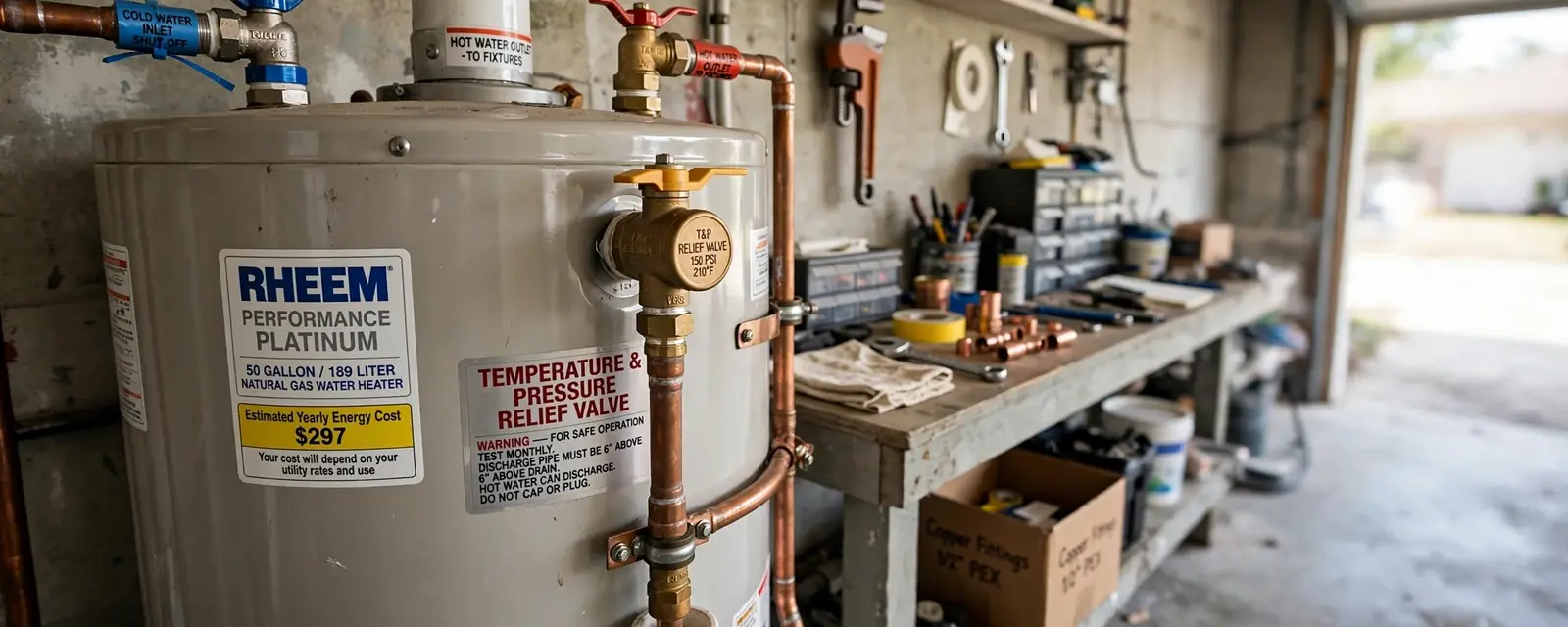
Water heater pressure relief valve replacement in Millburn, NJ homes starts with understanding the part. The temperature and pressure relief valve, or T&P valve, sits on the side or top of the tank and opens if the water gets too hot or the pressure climbs too high. It is the last line of protection when the thermostat or the household pressure fails to hold.
A valve that drips is either worn out or doing its job. Both possibilities need attention, because swapping the valve without finding the cause just gives you a new valve that drips.
Smell gas or see steam, step away
If you smell gas near the heater, leave the building at once, move at least 350 feet away, and then call PSE&G at 1-800-880-7734 or 911. If the valve is blasting steam or scalding water, keep people clear, shut off the heater's power or gas control if you can do so safely, and call the 24/7 line.
Sort what you see
| What you see | What it may mean | What to do |
|---|---|---|
| Steady drip, lever never touched | Worn seat, sediment, or high pressure | Call, since the cause matters |
| Drips only while the tank heats | Thermal expansion in a closed system | Have pressure and expansion checked |
| Hot water from the discharge pipe | Over-temperature or pressure | Shut off power or gas and call |
| Rust or mineral crust on the valve | Old valve, slow seep | Plan on replacement |
| Lever stuck, no flow when lifted | Valve fused by scale | Do not rely on it, call |
Why replacing the valve is not always enough
Household pressure can rise when water heats and expands inside a closed system, where a backflow preventer or pressure reducing valve keeps it from backing into the main. An expansion tank absorbs that, and without one the relief valve may open again and again until it never reseats.
A thermostat that has failed in the on position can also drive the water too hot. In that case the valve is doing exactly what it was built to do, and the fix is the thermostat or the heater.
A licensed plumber doing water heater repair will look at the valve, the discharge pipe, the household pressure and the thermostat in one visit. If the tank is old and rusting, the same conversation often turns to water heater installation of a new unit, since a valve change on a failing tank only delays the replacement.
Relief valve dripping or blasting?
Call the 24/7 line and a licensed plumber can check the valve, the pressure and the thermostat.
Signs the valve has failed
What to look for
- Constant drip or a damp spot under the discharge pipe
- Mineral crust or green corrosion around the valve body
- A lever that is stuck, bent or does not snap back
- No water flows when you lift the lever, since a valve that cannot open cannot protect the tank
- Water pooling around the base of the heater from a loose or rusted fitting
Safe handling, step by step
Turn off the heat source
Switch off the breaker for an electric heater, or set a gas heater's control to the off or pilot position.
Close the cold supply and let it cool
Shut the cold inlet valve and wait for the tank to cool before you touch anything.
Relieve the pressure
Open a hot tap upstairs, then drain a few gallons from the tank's drain valve so the water level falls below the T&P opening.
Remove the old valve
Unscrew it with a pipe wrench, take off the discharge pipe, and check the threads for damage.
Install a matching valve
Choose a valve with the same rating as the one listed on the heater label, wrap the threads with tape or sealant, and tighten snugly.
Refill and test
Open the cold supply and a hot tap to bleed air, restore power or gas, then check for leaks at the valve and discharge pipe.
Matching the replacement valve to the tank
Valves are not interchangeable. Each one has a pressure setting, a temperature setting, a heat input rating, a thread size and a probe length, and the probe has to reach into the tank water to sense the temperature. Take a photo of the heater's rating plate and the old valve before you shop.
A valve with the wrong rating can open too late or too early. The discharge pipe should also match the valve outlet size, and a plumber will check that it ends where hot water can discharge safely, with no valve, cap or threaded end.
Never cap it
Do not plug, cap or restrict the valve
Never thread a cap onto the valve, seal the discharge pipe, or install a valve in the pipe. A blocked relief valve cannot open, and a tank holding pressure it cannot release is dangerous.
The discharge pipe should run downward without kinks and end where escaping hot water cannot scald anyone.
What you can do and where to stop
A homeowner can reasonably test the lever once or twice a year, done gently while standing clear of the discharge. If water runs freely and the lever snaps back, that is a good sign. If it leaks afterward, the seat may have been scratched by scale.
The valve swap itself is within reach for a handy person with the right wrench, but hot water, gas connections and wet electrical areas raise the stakes. Do not try to cap or repair a valve in place, and call if the heater leaks anywhere else. Neighbors in Summit and Springfield get the same advice. When in doubt, shut the heater off and stop using it.
What changes the price of a valve job
- Whether the valve alone is bad, or the cause is pressure or a thermostat
- Whether an expansion tank has to be added or replaced
- The condition and length of the discharge pipe
- Corroded fittings or a stuck valve that complicates removal
- Gas or electric controls that need to be checked
- Whether the tank is old enough that replacing the heater makes more sense
Millburn, NJ: the plumbing code and permits
New Jersey's plumbing subcode is based on the National Standard Plumbing Code, which the state's Department of Community Affairs adopts. That is the framework behind how relief valves and their discharge pipes are installed.
Permit rules vary, so ask the Millburn building department whether a valve replacement, a discharge pipe change or a full heater swap needs a permit. Do not assume that a small job is exempt.
The takeaway is to ask before you start, and to keep the heater's rating label handy. The label tells the clerk and the plumber exactly what valve rating the tank needs.
Source type: NJ plumbing subcode and local building department
Frequently asked questions
Place a bucket under the discharge pipe and lift the lever gently for a second. Water should flow and the lever should snap back. If it does not flow, drips afterward, or sticks, replace the valve.
No. A plugged valve cannot open if pressure or temperature rises, and that defeats its purpose. Turn off the heater and call a licensed plumber.
Thermal expansion is the usual cause. Heated water takes more room, and in a closed system with nowhere to go, pressure rises and the valve opens. An expansion tank is the usual fix.
It can be scalding. Keep people and pets away from the end of the pipe, and never reach for the valve while it is running.
It is a wear item, not a lifetime part, and scale and age can leave it stuck or leaking. Replace it when it leaks or fails the lever test, and consider replacing it with an old heater.
Permit rules vary, so ask the Millburn building department before you start. New Jersey's plumbing subcode is based on the National Standard Plumbing Code, and a licensed plumber can tell you what the job normally involves.
Still have a question? Call the 24/7 line and talk it through with a dispatcher.